
Going to Taiwan
Author: Yun Wang
Taiwan was the most successful place for the Chinese National Language (Guoyu) Movement in the 20th century. While this relates to many historical contexts, it should primarily be attributed to those who went to Taiwan to spread the National Language. Who were they? Why did they go? What did they do? Looking back at history, this was a difficult, even somewhat chaotic process, and without a firm adherence to their beliefs, it would have been absolutely impossible to achieve.
Unsung Leaders
Zhao Naichuan (Shutian) This is an overlooked figure, almost untraceable on Chinese mainland websites today, yet his role in the Taiwan National Language Movement is comparable to Cai Yuanpei’s role in the broader National Language Movement. His name was Zhao Naichuan, and although he wasn’t as famous as his younger brother Zhao Naituan, he should not be forgotten. In 1944, Zhao Naichuan, then a legislator in the Legislative Yuan of the Nationalist Government, accepted the task of presiding over the takeover of educational affairs in Taiwan. On August 30, 1945, the Nationalist Government promulgated the “Organization Regulations of the Taiwan Provincial Administrative Executive Office,” and Zhao Naichuan was appointed as the Director of the Education Department of the Office. On October 25, he attended the surrender ceremony of Taiwan Province in the China Theater held at the Taipei Public Auditorium.
Zhao Naichuan was not an ordinary official; he was a scholar (xiucai) from the late Qing dynasty who later graduated from the Zhejiang Higher School. He then studied under John Dewey in the United States, earning a Bachelor of Philosophy and a Master of Education from Columbia University. He served as the principal of the Affiliated High School of Beijing Normal University and taught at various institutions, including Peking Normal University, Women’s Normal University, National Central University, Central Political School, and University of Nanking. He also held positions in the China Foundation for the Promotion of Education and Culture (the boxer indemnity management organization) and the Ministry of Education of the Nationalist Government. He was a veritable educator and academic official. In January 1946, the takeover work in Taiwan came to a temporary close, and Zhao Naichuan returned to the Legislative Yuan. He ultimately spent his final years teaching at East China Normal University.
Although his tenure in Taiwan was brief, Zhao Naichuan laid the foundation for the promotion of the National Language in Taiwan by astutely selecting Wei Jiangong and others. During his term as Education Director, he firmly demanded that faculty and staff at all levels of schools must learn the National Language, which profoundly influenced Taiwan’s later language policies.
The Backbone of the Taiwan National Language Movement Emerges from Baisha Town
Jiangjin is 180 li by water from Chongqing, with steamboats traveling daily. It was a large county in eastern Sichuan with rich resources and relatively developed culture, now under the jurisdiction of Chongqing. Baisha Town was a large town in Jiangjin. During the Anti-Japanese War, 19 middle and higher educational institutions—such as the Ministry of Education’s War Zone Primary and Secondary School Teachers Sichuan Service Corps, Chongqing Women’s Normal School, Eastern Sichuan Normal School, and National Women’s Normal College—as well as 18 primary schools and cultural institutions like the Central Library, National Institute for Compilation and Translation, Audit Department of the Nationalist Government, Finance Bureau, and Agricultural Credit Administration, were either founded in or relocated to Baisha Town. It became a gathering place for literati and educators. In his later years, Chen Duxiu also resided in Heshanping, not far from here.
Wei Jiangong (Tianxing) At the end of 1944, Zhao Naichuan first extended an invitation to Wei Jiangong, who was then the Dean of Academic Affairs and Director of the National Language Department at the National Women’s Normal College located in Baisha Town, through the college’s president Xie Xunchu. Wei Jiangong gladly accepted. As a member of the National Language Promotion Committee (later known as the “National Language Committee”), Wei Jiangong proposed at its 12th standing committee meeting: “To urgently save our Taiwanese compatriots and facilitate the rapid restoration of their national consciousness, promoting the National Language in Taiwan is genuinely the most pressing task for educational recovery.” In the first half of 1945, a Taiwan administrative cadre training class was set up in Chongqing. Wei Jiangong left Baisha Town for Chongqing to teach the National Language to the educational staff of this training class, who would later head to Taiwan to manage educational affairs. In August, Wei Jiangong was seconded to the Education Department of the Taiwan Provincial Administrative Executive Office in his capacity as a standing committee member of the National Language Committee. In October, he traveled with his family from Chongqing to Shanghai, accompanied by He Rong, Wang Ju, Wang Yuchuan, and some teachers and students from the National Women’s Normal College’s National Language Department. Due to limited transportation, they waited in Shanghai in January 1946, and it wasn’t until February 1 that Wei Jiangong managed to reach Taipei just before the Lunar New Year.
Wei Jiangong was the central figure of the early Taiwan National Language Movement. Not only did he lead the work, but he also played a massive role in recruiting personnel. Most of those who went to Taiwan to participate in this work at the time were his colleagues, friends, and students. These individuals possessed strong academic capabilities and teaching experience, becoming the cornerstone of the movement’s success. He led the Taiwan National Language Committee, discussed and formulated methods for promoting the language, established National Language training institutes, and founded the Mandarin Daily News (Guoyu Ribao). He didn’t return to Peking University to continue teaching until December 1948.
Wang Yuchuan Wang Yuchuan was from Raoyang, Hebei. In his early years, he was a member of the Association for the Promotion of Gwoyeu Romatzyh (National Language Romanization) and had hosted Romanization training sessions in Jinan. He authored professional articles such as “The Problem of Differentiation of Retroflex Rhymes in the National Language” and possessed deep expertise in the field. During the war, he relocated to the rear area and was teaching English at the National Women’s Normal College, concurrently teaching in the National Language Department. His invented “Eclectic Teaching Method of Phonetic Symbols” greatly benefited his students. This was perhaps why Wei Jiangong invited him to Taiwan to promote the language. He served as a standing committee member of the Taiwan National Language Committee, responsible for investigating dialects and planning promotion programs. When Wang Yuchuan’s book National Language Speaking Materials and Teaching Methods was published, both Wei Jiangong and He Rong wrote prefaces for it. He also promoted his teaching method at the Taiwan National Language Committee’s Experimental Primary School, collaborating with Ms. Li Jingchang from Wushan, Sichuan, until their work was forced to a halt by the “February 28 Incident.” Wang Yuchuan was a loyal follower of Gwoyeu Romatzyh, unswervingly promoting the National Language and its Romanization in Taiwan.
Tai Jingnong (Original surname Tantai, courtesy name Bojian, original name Chuanyan, renamed Jingnong, alias Longpo) Tai Jingnong was the head of the Chinese Literature Department at the Women’s Normal College. This three-year program differed from the National Language Department, as its goal was to train middle school Chinese teachers, whereas the National Language Department was a one-year crash course. After the war, Tai Jingnong resigned over disagreements with the school regarding its relocation. Invited by his old friend Xu Shoushang, Tai Jingnong went to Taiwan, where he worked at the Taiwan Provincial Institute for Compilation and Translation and later served as the head of the Chinese Literature Department at the National Taiwan University. Although not a member of the National Language Committee, Tai Jingnong came from Baisha Town alongside Wei Jiangong and held a pivotal position in Taiwan’s National Language circles.
Gong Shuchi Gong Shuchi’s story is deeply tragic. In the early summer of 1946, Gong Shuchi, who had been appointed chief secretary of the Taiwan National Language Committee, headed to Taiwan with a few classmates from the Women’s Normal College. Unexpectedly, shortly after boarding a ship in Chongqing, he fell into the water and drowned. His younger cousin, Gong Shumian, was recruited to Taiwan from Xiamen and was unaware that her cousin was also en route to Taiwan. Sadly, when she was informed of the news, she had lost all chance of seeing him again. She only heard that due to severe myopia, he misstepped on the pontoon gangway and fell into the Yangtze River in Mianyang, Hubei. Gong Shuchi remained forever by the banks of the Yangtze, while his name was forever etched onto the roster of the Taiwan National Language Committee. Graduating from Peking University’s Chinese Literature Department, Gong Shuchi had taught at Peking University, National Southwestern Associated University, and other schools, and had also been dispatched to the Yangon Overseas Chinese High School and the Nanyang Research Institute in Myanmar. It’s believed he had a close relationship with Wei Jiangong. Not only did they work together, but Wei Jiangong also wrote the preface for Gong Shuchi’s 1945 monograph Han Yu and His Classical Prose Movement, the only monograph on the Classical Prose Movement published during the Republican era.
Zhang Xuanchen In addition to the National Women’s Normal College, Baisha Town also hosted a special Baisha University Preparatory Class set up by the Ministry of Education during the war. Zhang Xuanchen came from there and was the first person to accept the Ministry of Education’s invitation to go to Taiwan. Being in the same town, Zhang Xuanchen and Wei Jiangong surely had a connection, and his invitation was likely related to Wei. Zhang Xuanchen served as the head of the general affairs group in the initial Taiwan National Language Committee. In 1948, Zhang Xuanchen oversaw the publication in Taiwan of a facsimile edition of The Record of the Canglang Pavilion handwritten by his father-in-law Wang Yimin, for which Wei Jiangong specifically wrote an epilogue. Zhang Xuanchen, along with Wang Jieyu from the Sichuan Provincial Mass Education Hall, Xie Zhongquan from the Overseas Chinese Teacher Training Class, and Qin Zhixue from the Independent Publishing House of the Central Party Headquarters Secretariat, were among the first batch of people invited by the Taiwan Administrative Executive Office. However, due to transportation limitations, the four of them only arrived in Taiwan by ship escorting equipment from Shanghai on March 16, 1946.
The Establishment of the Taiwan National Language Committee
After Wei Jiangong and others arrived in Taiwan, they actively launched various initiatives. On April 2, 1946, the Taiwan National Language Committee was officially established with the following personnel structure:
- Chairman: Wei Jiangong
- Vice Chairman: He Rong
- Standing Committee Members: Fang Shiduo, Li Jiannan, Qi Tiehen, Sun Peiliang, Wang Yuchuan
- Committee Members: Ma Xueliang, Li Jinxi, Lin Zhaoxian, Gong Shuchi, Xiao Jialin, Xu Xuxian, Zhou Bianming, Zhang Tongguang, Zhu Zhaoxiang, Shen Zhongzhang, Zeng Depei, Ye Tong, Yan Xuequn, Wu Shouli, Wang Ju
Among the aforementioned individuals, Ma Xueliang, Li Jinxi, Xiao Jialin, Zhou Bianming, Shen Zhongzhang, and Yan Xuequn never went to Taiwan, only providing related support work from the mainland. Lin Zhaoxian and Wu Shouli were local Taiwanese. The rest were sent from the mainland to support Taiwan.
During the war, the wartime capital Chongqing received government organs, schools, and enterprises from all over the country, acting as China’s political, military, economic, and diplomatic center. Over 3,000 celebrities and foreign diplomats gathered there. The National Language Committee’s office was also located there. Simultaneously accepting the Ministry of Education’s invitation alongside Wei Jiangong were He Rong, a specialized resident member of the Committee, and Wang Ju, an executive secretary. Both had military experience and were considered officials in Chongqing at the time. On January 16, 1946, He Rong and Wang Ju arrived in Taipei ahead of Wei Jiangong. In August, He Rong’s wife and two sons, He Xin and He Geng, also arrived in Taipei and moved into their residence on Quanzhou Street.
He Rong (Original name He Zhaoxiong, courtesy name Zixiang, alias Laotan) He Rong studied at the English Department of Peking University before joining the army during the Northern Expedition. In 1931, he joined the National Language Committee as an editor and later served as a specialized committee member. A writer, he taught at Peking University, worked as a magazine editor, and served in the Ministry of Education’s Textbook Editorial Committee and the Military Affairs Commission’s Logistics Headquarters Wounded Soldiers Education Committee, accumulating extensive experience. Upon accepting the invitation to Taiwan, he resigned from his position as Director of the National Language Department at the National College of Social Education (Bishan). He Rong was a core member of the Taiwan National Language Committee, and particularly after Wei Jiangong’s departure, he became the de facto leader of the movement in Taiwan. He helped found the Mandarin Daily News, taught Chinese on the Taiwan Broadcasting Station, served as a professor at Taiwan Normal University, and acted as the chief editor at the National Institute for Compilation and Translation. He was a pivotal figure in the movement.
Wang Ju (Real name Huilin, courtesy name Zihe, pen name Huabutingzhu, nickname “Taiji Gallbladder”) Wang Ju studied at the Chinese Department of Shandong University and excelled in martial arts. In 1932, he entered the Shandong Provincial Mass Education Hall to teach Chinese. During the war, he cast aside his pen to join the military and participated in the Battle of Xuzhou. Later, he joined the Ministry of Education’s Social Education Work Group to conduct propaganda and education in rural areas of Hunan and Guizhou. In 1939, he began engaging in wounded soldiers’ education under the Military Affairs Commission, leaving his footprints across 12 provinces. During this time, he taught illiterate soldiers to read at the Disabled Veterans Institutes in Luzhou and Jiang’an, Sichuan. Starting from phonetic symbols, the soldiers could soon read books and newspapers. In 1941, he joined the National Language Committee, highly appreciated by the then-chairman Wu Zhihui. Upon arriving in Taiwan, Wang Ju served as the head of the propaganda group for the Taiwan National Language Committee, and from then on, his presence spanned primary and secondary schools across the province. Notably, when Wang Ju first joined the Committee, under Xiao Jialin’s instruction, he designed and supervised the manufacturing of two sets of copper phonetic typefaces. In March 1946, He Rong specially requisitioned these two sets from the Ministry of Education. After arriving in Taiwan, Wang Ju and Li Yintian organized them, found some missing, and replenished them through the Commercial Press in Shanghai. These became the main text typefaces for the Mandarin Daily News published in 1948. Interestingly, Taiwanese people today know Wang Ju primarily as an inheritor of Yang-style Tai Chi martial arts.
Sun Peiliang Sun Peiliang was not an official in Chongqing, and his relationship with the National Language Movement was ill-fated. In 1933, he tested into the China Dictionary Compilation Office but worked on half-pay for four years due to his educational background. He originally went to Chongqing to work at the Institute for Compilation and Translation, but was dismissed due to disagreements with the chief director Liang Shiqiu. He then joined the Chongqing Municipal Normal School to teach Chinese but was fired for supporting student protests. At a loss, he enthusiastically accepted Wei Jiangong’s invitation to Taiwan, arriving by the end of 1945 to serve as the head of the editing and review group of the Taiwan National Language Committee, responsible for collecting, reviewing, and editing national language pictorials, dictionaries, teaching materials, and methods. Unexpectedly, in the autumn of 1946, he went with the newly appointed president Wang Shi’an to take over the Tainan College of Engineering. Soon after, he was transferred back to the Taiwan Provincial Institute for Compilation and Translation, but the institute was closed due to its director Xu Shoushang facing trial, leaving Sun Peiliang unemployed. In 1947, he was forced to return to the mainland, later joining the Southwestern Teachers College and ultimately becoming an expert in Iranian history.
Li Jiannan Li Jiannan graduated from the Law Department of Peking University. When recruited by Wei Jiangong to Taiwan, he was a professor at the National College of Social Education (Bishan) and a colleague of He Rong. Li Jiannan subsequently served in Taiwan’s schools and social education for a long time, authoring articles like “On the Composition Problems of Primary School Students in This Province” to explore how to help Taiwanese children educated in Japanese overcome the difficulties of language transition and smoothly connect with National Language writing. In 1982, the Mandarin Daily News also published his teaching books such as Practical National Language Conversation.
Shanghai served as a transit hub for personnel heading to Taiwan. The Shanghai Office of the Taiwan Provincial Administrative Executive Office was located here, and most personnel handled their transfers here to fly or sail to Taiwan. Fang Shiduo was no exception.
Fang Shiduo Graduating from the Faculty of Arts at Peking University, Fang Shiduo received funding from the Sino-British Boxer Indemnity during the later stages of the war to conduct linguistic surveys in the border areas of Yunnan, Myanmar, Thailand, and Vietnam. Passing through Pu’er after the war ended, he was forcefully retained by the Yunnan Provincial Pu’er Middle School to teach English for half a year. At this time, he received an invitation to Taiwan but did not give a clear reply. Returning to Kunming and finding that wartime organizations had all withdrawn, he helplessly responded to Chongqing’s invitation and received travel expenses, flight tickets, and a settlement allowance. Thus, Fang Shiduo flew from Kunming to Shanghai. He first went to the Taiwan Administrative Executive Office’s branch and then to Laixunge to inquire about information regarding the National Language Committee. At the Laixunge counter, he heard that Wei Jiangong happened to be upstairs, and the master and student had a joyous reunion. Wei Jiangong told him that waiting for a ship would take half a month and suggested he temporarily stay in Shanghai to depart with Tai Jingnong. Meanwhile, his wife and children joined him from Yangzhou. In the summer of 1946, Fang Shiduo’s family and Tai Jingnong boarded the “Haiyu” ship arranged by the Bank of Taiwan. By autumn, he and his wife, Zhang Minyan, were both working at the Taiwan National Language Committee, beginning their careers in promoting the National Language. He participated in preparing the Mandarin Daily News and later became an executive director of the newspaper. Under the pen name “Dafang,” he published numerous articles and served as a professor at Tunghai University until retirement. He remained active in Taiwan’s educational circles, dedicating his life to promoting the National Language. Like many who came to Taiwan, Fang Shiduo originally intended to work there for just one year, so he left his eldest son on the mainland.
Qi Tiehen (Real name Xun) Qi Tiehen came to Taiwan from Shanghai to serve as a professor at the invitation of Soochow University’s School of Law and Commerce. Upon arriving in Taiwan, he was immediately hired as a standing committee member and head of the training group for the Taiwan National Language Committee, responsible for training National Language teachers, inspecting language education, and propaganda. He became a very important figure in the Committee. Qi Tiehen was of Mongolian descent and graduated from the Manchu and Mongolian Advanced School established in Beijing for Eight Banners youths. He served as a teacher and principal in several primary schools in Beijing. In his spare time, he attended the National Language Training Class for Teachers organized by the Ministry of Education in Beijing, thereby coming into contact with the educational theories of Wang Yi, Qian Xuantong, Li Jinxi, and others, and began dedicating himself to learning Chinese characters. Later, he worked long-term as an editor at the Commercial Press, authoring or editing papers and monographs such as National Language Romanization, Beijing Witty Remarks, and Lecture Notes on National Language Phonetic Symbols. After the Commercial Press in Shanghai was destroyed during the war, he taught Chinese at Jinan University, Great China University, and Qingxin Middle School. When the Nationalist Government first took over Taiwan, the dispatched personnel spoke with various northern and southern accents, causing Taiwanese primary school students to mistakenly believe there were six kinds of National Language. On March 1, 1946, the Education Department began using radio to broadcast standard National Language pronunciation programs. Initially, they used Zhao Yuanren’s gramophone records. Starting in April, Ke Xuntian provided pronunciation, and by May 1, Qi Tiehen took over the task. He first broadcasted the Mass National Language Textbook (four volumes), translated into Hokkien by Lin Shaoxian (the original author), and then the provisional textbook for national schools, translated by committee executive Lin Liang. Every Saturday, he also answered questions and taught the primary National Language conversation compiled by the Committee. In this way, Qi Tiehen broadcasted the National Language from 7:25-7:55 AM and 6:00-6:30 PM every day for eight full years. As a native Beijinger, his pronunciation was exceptionally standard, and his broadcast gradually became a household voice in Taiwan. Some later even joked that he tried “too hard,” giving Taiwanese people a “Beijing flavor.” After his passing, Taiwan’s Vice President Yen Chia-kan specially presented a plaque inscribed with “Enduring Legacy,” praising his noble virtues and contributions to promoting the National Language.
Before taking over Taiwan, the Ministry of Education’s National Language Committee made some assumptions: since Hokkien was prevalent, it could replace Japanese for daily life needs; Taiwanese compatriots hated Japanese, and when unable to speak the National Language, they would prefer to revert to their mother tongues, such as Hokkien or Hakka. Based on these assumptions, scholars like Wei Jiangong advocated “preserving the mother tongue while promoting the National Language.” Consequently, many people from Fujian were invited, including many researchers of Hokkien and Hakka.
Zhu Zhaoxiang Zhu Zhaoxiang graduated from the Law Department of Xiamen University. While pursuing further studies at the National Southwestern Associated University between 1939 and 1941, he switched to studying linguistics and authored A Comparative Study of Zhangzhou and Xiamen Dialects. Because experts like Wei Jiangong advocated promoting the National Language in Taiwan through dialect comparison, Zhu Zhaoxiang was hired as the head of the research group in the first Taiwan National Language Committee, deeply engaging in the design and implementation of related policies. On October 1, 1946, the Taiwan National Language Committee established a Demonstration National Language Promotion Institute in Beitou, with Wang Jieyu as director and Zhu Zhaoxiang as instructor. Their mission was to experiment with “using comparative analogy to learn the National Language from dialects.” The institute moved to Tamsui in June 1947 and ultimately concluded in August of the same year. This experiment proved the feasibility of transitioning from dialects to the National Language. The Taiwan Dialect Phonetic Symbol Scheme, formulated by Zhu Zhaoxiang in 1946, was promulgated by the Committee as a tool for annotating local dialects. He later completed the Draft Romanization of the Xiamen Dialect.
Information on some personnel in the first Taiwan National Language Committee remains sparse, and some invitees left Taiwan due to the White Terror following the 1947 “February 28 Incident.”
Xu Xuxian, Ye Tong, Zeng Depei Investigations indicate that Xu Xuxian was from Fuzhou and served as the principal of Fujian Yong’an Middle School between February 1943 and August 1945. Following this, he went to Taiwan to serve as the principal of the National Chiayi Senior High School, and later as the Section Chief of the Third Section of the Education Department of the Taiwan Administrative Executive Office. Ye Tong and Zeng Depei were also support personnel from the mainland. Ye Tong was assigned by the Education Department as the person-in-charge stationed in Chongqing on October 9, 1945. His main task was recruiting and evaluating people in Chongqing, Shanghai, and other places willing to take up teaching positions in Taiwan. After arriving in Taiwan from the mainland, Zeng Depei served as the Section Chief of Secondary Education in the Education Department.
Zhang Tongguang Zhang Tongguang graduated from the Beijing Higher Normal School (Department of History and Geography) and had worked at Kaiming Bookstore and Peiyang Engineering College. Invited by Li Jigu, he went to Taiwan to prepare for the establishment of Taiwan Normal College, serving as a professor and head of the Chinese Department. After the “February 28 Incident,” he immediately accepted Pan Tianshou’s invitation to return to the mainland, transferring to become a professor and dean of academic affairs at the National Hangzhou School of Art.
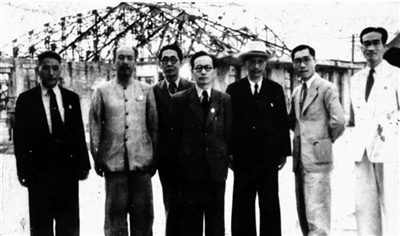
Members of the 1946 Taiwan National Language Committee at Taoyuan Airport. From left: Zhang Xuanchen, Wang Yuchuan, He Rong, Wei Jiangong, Qi Tiehen, Fang Shiduo, Wang Ju
The Publication of the Mandarin Daily News
The Mandarin Daily News (Guoyu Ribao) was the first National Language newspaper in Taiwan, founded by Wei Jiangong, with the masthead inscribed by Hu Shih. Its predecessor was the Guoyu Xiaobao (National Language Small News), founded in Beiping in January 1947. In Beiping, Wei Jiangong mobilized the vice president of Guoyu Xiaobao, Wang Shoukang, to bring his family and printing copper matrices to Taiwan to run the newspaper. Officially launched on October 25, 1948, it is the only Chinese newspaper globally to feature full text annotated with phonetic symbols. Its mission was to promote the National Language and popularize education, playing a crucial role in Taiwan’s National Language Movement.
Wang Shoukang Wang Shoukang was a man full of passion. Graduating from Beijing Normal University, he initially chose to leave literature for the military. Even in the army, he upheld the ideals of his teacher Li Jinxi and others by spreading the National Language. He taught in middle schools and served as a university professor in Beiping, but under Wei Jiangong’s urging, he passionately went to Taiwan to run a newspaper. In its early days, he was the only person with experience running a newspaper, and despite grueling conditions, they succeeded. Later, he founded the National Language Department at Taiwan Normal University, spreading the “National Language religion” he believed in until illness rendered him speechless. It can be said that he dedicated his entire life to the National Language cause.
Lin Liang Lin Liang was from Tong’an, Fujian, and was already a well-known writer in Xiamen before moving to Taiwan. In Taiwan, he studied at the English Literature Department of Tamkang English Junior College and the National Language Department of Taiwan Normal College. He later became a famous children’s literature author in Taiwan. He served as the manager of the publishing department for the Mandarin Daily News and as an editorial committee member for primary school textbooks at the National Institute for Compilation and Translation, remaining constantly active in Taiwan’s National Language circles. In 1949, the Mandarin Daily News nearly closed due to financial difficulties. It was then that Wu Zhihui and Ministry of Education National Language Committee members in Taiwan—such as Chen Songping (Maozhi), Wang Yi (Yian), Hu Shih (Shizhi), and Fu Sinian (Mengzhen)—stepped in to support the paper, reorganizing it and forming a board of directors, ultimately helping it survive the crisis. These intellectual elites continued to focus on and support the National Language Movement after arriving in Taiwan.
The Promoters of the National Language Submerged in History
For a long time, the promotion of the National Language in Taiwan was hindered by a severe shortage of personnel, making the need for experienced promoters akin to “longing for rain during a severe drought.” Before the Taiwan National Language Committee was established, the Xiamen Municipal Government sent 92 teachers from national schools to Taiwan, but their proficiency was very poor. After training, 33 of them became promoters. The Ministry of Education established three National Language specialized courses across the country, but before August 1946, the only personnel to actually arrive in Taiwan were: six from the National Northwestern Normal College (Lanzhou) including Li Yintian, Li Shaoming, Zhang Tao, Wang Xuehui, and Wu Guining; 18 from the National Women’s Normal College (Baisha); and 5 from the National College of Social Education (Bishan). That year, the normal colleges in Lanzhou and Baisha were closed, the Social Education College was restored in Suzhou, and after the Peiping Normal College was restored, it established its own National Language specialized course. At the same time, over 70 people from Beiping, including Ma Zhixin, were invited by the Peiping-Taiwanese fellow townsmen association. The organizer, Zhang Shenqie, was Taiwanese and had attended the National Language Normal School established by Wu Zhihui at the Commercial Press in Shanghai. In April 1946, using the premises of China University in Beiping, he opened a training class teaching Taiwan’s geography, history, and customs, with famous professors from Beiping and Taiwanese individuals serving as instructors, while the China Dictionary Compilation Office provided National Language instruction. The enrollees were mostly students from Peking University, Beijing Normal University, and Fu Jen Catholic University, departing for Taiwan in batches after completion. Zhang Shenqie actively recruited and trained educational personnel for Taiwan in Beiping. After returning to Taiwan, he was invited by Hong Yanqiu, principal of the Taiwan Provincial Taichung Normal School, to serve as dean of academic affairs, before later entering the film and theater industry. In 1948, the Taiwan National Language Committee hired 18 graduates from the Peiping Municipal Normal School via the Beiping Municipal Education Bureau, most of whom were assigned to the National Language Experimental Primary School, such as Liu Deyi, Cai Yalin, and Zhang Fengqian. Others were assigned to the Taipei Women’s Normal Affiliated Primary School, like Liu Hanmin, Cong Yintang, and Chen Shurong. That same year, Wang Shoukang arrived in Taiwan from Beiping, bringing not only a newspaper but also a group of his students from the Beijing Normal University’s National Language Department. Among them, six boys shared the same dormitory; they jokingly signed up together to teach in Taiwan and surprisingly all passed. None of them expected that this departure would be permanent. Their life changes mirrored those of many who went to Taiwan to spread the National Language.
Huang Zengyu (courtesy name Wangping) from Xian County, Hebei, had this graduation evaluation: “Tense, impulsive, prone to making mistakes, and even destroying oneself; the moments of creating miracles are rare. Deep thought and reflection will help you discover the depths of your soul, making your life fuller, happier, and more complete.” After coming to Taiwan, Huang taught at the Taipei National Language Experimental Primary School. Later, with Wang Shoukang’s help, he entered the Taiwan Provincial Normal College to study and eventually began teaching in its National Language Department, achieving a successful career. Tragically, he died in a car accident while traveling in the United States. He, his wife, and two sons were all in the car; as the driver, he and his eldest son perished, while his wife and younger son survived. One wonders if his wife ever saw that evaluation; a classmate’s assessment from decades prior eerily pinpointed the root of his tragedy.
Zhai Jianbang from Yangqu, Shandong, was evaluated by classmate Niu Yurong: “Because he has a strong body, he can still struggle under difficult circumstances. He is straightforward and passionate. If he could add some rationality, he would definitely achieve his goals.” A man of few words, he spent his life teaching the National Language in Taichung middle schools. At the age of 64, he vomited blood in the teachers’ lounge and was taken to the hospital by colleagues. Discovering he was in stage four stomach cancer, he never walked out of the hospital. He truly was the person who “could still struggle under difficult circumstances.”
Gong Qingxiang (courtesy name Ruiyong) from Huimin, Shandong, was described by Niu Yurong as: “Chubby and looking somewhat robust, his plain and simple appearance makes it easy to remember his image. His words and actions are hasty yet straightforward; he is unafraid of trouble but doesn’t provoke it. Offending a few enemies never bothers him.” Perhaps it was his plump appearance and his “unafraid of trouble but doesn’t provoke it” personality that crafted Gong Qingxiang’s perfect life. After arriving in Taiwan, he served as a Chinese literature teacher at Taipei Municipal Jianguo High School, later becoming a beneficiary of the commercialization of education. He made a fortune running college entrance exam cram schools, immigrated his entire family to the United States, providing his children with the best education, and spent his final years there. His daughter, Gong Zengheng, always humbly says, “My father didn’t really do anything; he was just teaching.” Yet, seeing Ms. Gong Zengheng’s persistent, selfless dedication to animal protection across various countries, isn’t that precisely a reflection of her father from years ago?
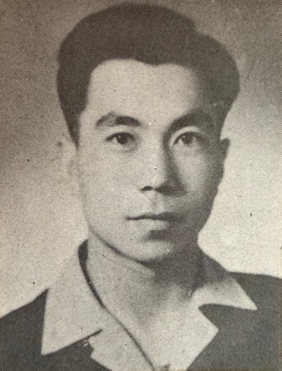
Huang Zengyu
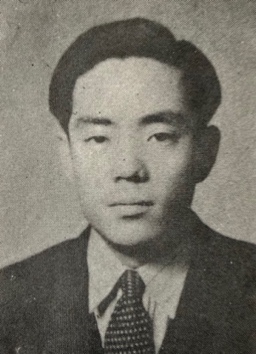
Zhai Jianbang
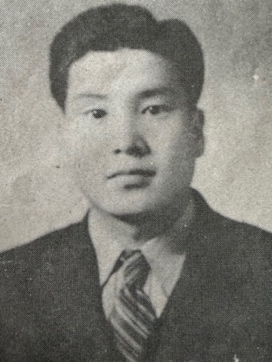
Gong Qingxiang
Feng Changqing wrote his own evaluation: “The difficult and miserable life is like a fierce beast trying to devour me; yet I do not tremble, nor do I lose heart; I muster my courage, run forward desperately, hoping to find the new life ahead.” This passage served as Feng Changqing’s self-encouragement and spur. Establishing himself in a strange land like Taiwan—does that count as a new life?
Zhao Wenzeng from Daxing, Hebei (now part of Beijing), received this evaluation from Gong Qingxiang: “Brave and resolute, cautious in dealing with the world, likes making friends, amiable, a bit serious in his carelessness in studying; if he can strive to pursue, he will surely achieve success.” Zhao Wenzeng served as a middle school National Language teacher in Taiwan continuously, which should count as striving to pursue.
Zhang Boyu was the oldest in the dormitory, already 26 when he went to Taiwan. Female classmate Chen Jirong wrote for him: “He is a fat man, tall, with a straightforward and generous personality, fond of joking and even better at humor. Anyone who sees him will feel a pleasant and relaxed mood.” However, Zhang Boyu received the harshest scolding from Wang Shoukang. Once, he joked to Wang Shoukang, “Teacher Wang, you see that we brothers are all so capable, wouldn’t it be great if you led us to form a company and make money together! Can we stop doing language education?” Wang Shoukang rarely scolded his students. After thoroughly berating him this time, he earnestly advised them: “No matter how hard it is, you must engage in language education, because what we believe in is this ‘National Language religion’.” Perhaps it was this scolding that led to Zhang Boyu’s considerable achievements. Not only did he teach the National Language in Taichung his whole life, but in 1974, he compiled the Historical Materials on the National Language Movement in the Taiwan Region, published by the Commercial Press in Taiwan. This book detailed the evolution of languages in Taiwan and the process of spreading the National Language, holding high academic value.
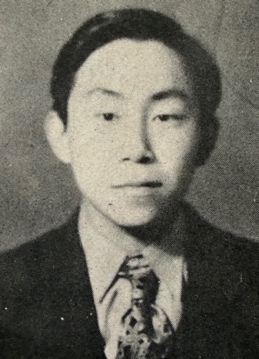
Feng Changqing
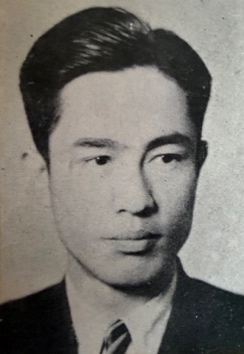
Zhao Wenzeng
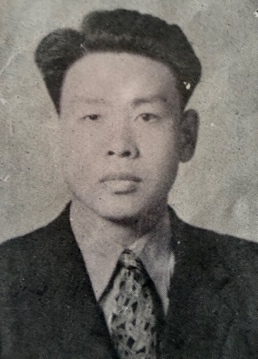
Zhang Boyu
The young people who came to Taiwan had no relatives there; Wang Shoukang naturally became their patriarch. Every Chinese New Year, they would gather at Teacher Wang’s house for New Year’s Eve dinner, several strong young men forming a large family. Teacher Wang was responsible for mixing the dumpling filling, while the students rolled the wrappers, made the dumplings, peeled garlic, and boiled them. After dinner, they would play bridge, drink tea, and chat about their past times in Beiping. With nowhere else to go, they could only rely on Teacher Wang to complain, vent, and share their troubles and joys. Huang Zengyu visited his teacher’s house frequently, often without much reason, sometimes just to ask about a few rare characters. He would endlessly chatter to the teacher’s wife about his romantic woes. After earning some extra money, he pawned his old bicycle, bought a new one, and radiantly pushed it over to show off to his teacher. It was a shiny, eighty-percent new British Phillips bicycle, which he used to court the girl who later became his wife. Once, a student came to Teacher Wang late at night to borrow money—in Wang Shoukang’s words, he had “gone wildly astray.” The teacher scolded him for a while but still had to take out money to help him out. When the White Terror engulfed Taiwan, these young people from Beiping were detained one by one. Wang Shoukang made repeated trips in and out of the political prisoners’ detention center on Aiguo East Road in Taipei, bailing them out one by one. One was extremely anxious because his bail was delayed. Upon seeing Wang Shoukang, he said, “Teacher Wang, if you don’t come soon, I’ll be like Wu Dalang becoming emperor—with no one to vouch for me!” Amidst grievance and fear, he didn’t forget to display a little humor.
These six young men were like ordinary people who went to Taiwan; some to pursue ideals, some for career development, some to earn high salaries, and some merely out of saving face for a friend. They arrived in Taiwan and were forever separated from their hometowns and loved ones. They did nothing Earth-shattering, but practically spread the National Language in Taiwan through their ordinary educational careers. They endured hardships, loneliness, mediocrity, and even the White Terror, ultimately dedicating themselves to Taiwan’s National Language cause. All these people deserve to be remembered.
Notes: The February 28 Incident: On the evening of February 27, 1947, investigators from the Taiwan Provincial Monopoly Bureau injured a female contraband cigarette vendor, Lin Jiangmai, with a rifle butt, sparking public outrage. Investigator Fu Xuetong fired into the crowd as a warning, killing an innocent citizen, Chen Wenxi. On February 28, enraged citizens besieged the Monopoly Bureau and petitioned the Chief Executive, Chen Yi, at the Administrative Executive Office, but were fired upon by guards, leaving several dead on the spot. The situation rapidly escalated, triggering a series of mass protests and incidents against mainlanders that spread across Taiwan. After conferring with Kuomintang officials, Chiang Kai-shek deemed the “February 28” incident a “riot” and urgently ordered the 21st Army stationed in Shanghai to rush to Taiwan by ship before March 8. Subsequently, the populace faced massive bloody suppression. This incident somewhat altered the direction of Taiwan’s National Language Movement. Originally, the movement was guided by scholars and experts who only rejected Japanese, not other local languages. Following this incident, the Kuomintang adopted strict measures to strengthen its rule, comprehensively banning the use of Japanese and other Taiwanese vernaculars in public places. This provoked resentment from many indigenous people and deviated from the movement’s original intentions.
References: Historical Materials on the National Language Movement in the Taiwan Region, edited by Zhang Boyu, Taiwan Commercial Press, November 1974. Wei Jiangong: A Grandmaster of the Era, by Ma Si, Culture and Art Publishing House, February 2007. Outline History of the National Language Movement, by Li Jinxi, Commercial Press, May 2011. A Pictorial History of the Chinese Literature Department of Beijing Normal University 1902-1949, Beijing Normal University Press, July 2020. A Youth Joking as Always, by Wang Zhengfang, Beijing Publishing Group Beijing October Arts & Literature Publishing House, June 2020.
April 28, 2026, in Beijing