
Cui Ji: A Rising Star at the Great Dictionary Compilation Office
Author: Cheng Shiyin
During the Republican era of the last century, Li Jinxi and Qian Xuantong initiated a project that gathered a generation of linguistic elites to compile the Great Chinese Dictionary (Zhongguo Da Cidian), a comprehensive work of ancient and modern Chinese intended to rival the Oxford English Dictionary. However, due to wartime turmoil, lack of funding, and changing times, this grand vision was never fully realized — leaving only foundational achievements such as the Guoyu Cidian (National Language Dictionary). In 1956, the Compilation Office was merged into the Institute of Linguistics of the Chinese Academy of Sciences. Its personnel (such as Wei Jiangong and Wang Shuda), 2.5 million index cards, and editorial conventions laid the foundation for compiling the Modern Chinese Dictionary (Xiandai Hanyu Cidian). A trial edition of the Modern Chinese Dictionary appeared in 1960, and its first official edition was publicly released in December 1978. After many revisions, the Modern Chinese Dictionary has become the iconic reference work for the standardization of modern Chinese — the most authoritative and widely used standard dictionary in contemporary Chinese.
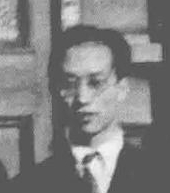
Cui Ji (courtesy name Shaoxi), a 20-year-old English major at Beijing Normal University, was fortunate enough to take part in this great undertaking. Li Jinxi, the director of the Compilation Office, was concurrently the head of the Chinese Department at Beijing Normal University; he recruited students from the Chinese Department to participate in compiling the great dictionary. This both eased the office’s funding and staffing shortages and gave students the chance to hone their academic skills and accumulate scholarly experience through work-study. Cui Ji joined this “student corps.”
According to the staff roster of the Great Chinese Dictionary Compilation Office (August 1931) — see Figure 1 — there were 31 staff members, headed by famous masters of linguistics such as Li Jinxi, Qian Xuantong, Liu Fu (Liu Bannong), and Wei Jiangong. Cui Ji appears in the 14th position, with the title “Commissioned Compiler (Type B, with Type A compensation).” At that time, compilers were classified into four types: full-time compilers, special-contract compilers, assistant compilers, and commissioned compilers. Type A commissioned positions required regular working hours, while Type B positions were paid by workload. As a student still in school, Cui Ji was naturally a “Type B”; the remuneration for writing and translation was further divided into four classes — A, B, C, and D — and Cui Ji enjoyed the highest “Type A compensation.” A note appended to the roster reads: “Type B commissioned compilers, as well as commissioned collectors, organizers, and clerks, are too numerous to list and are temporarily omitted from this table.” Aside from Cui Ji, only two other “commissioned” clerks are listed on the roster, which shows that Cui Ji stood out among the office’s “student corps.”
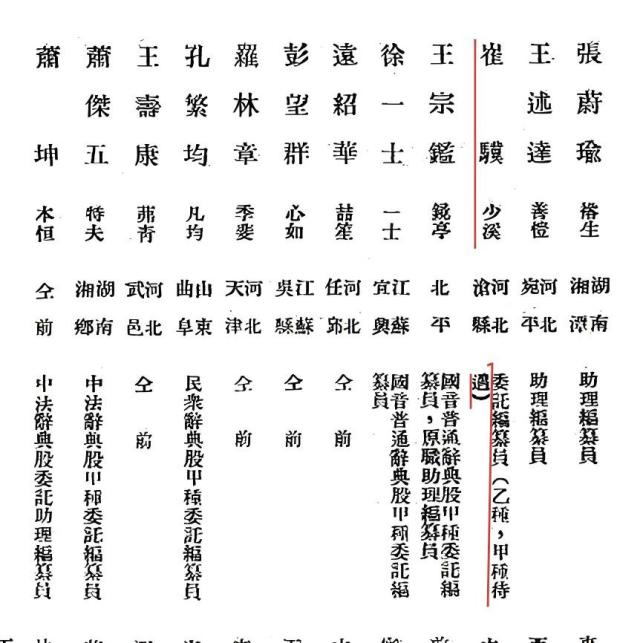
Figure 1: Compilation Office Staff Roster (August 1931)
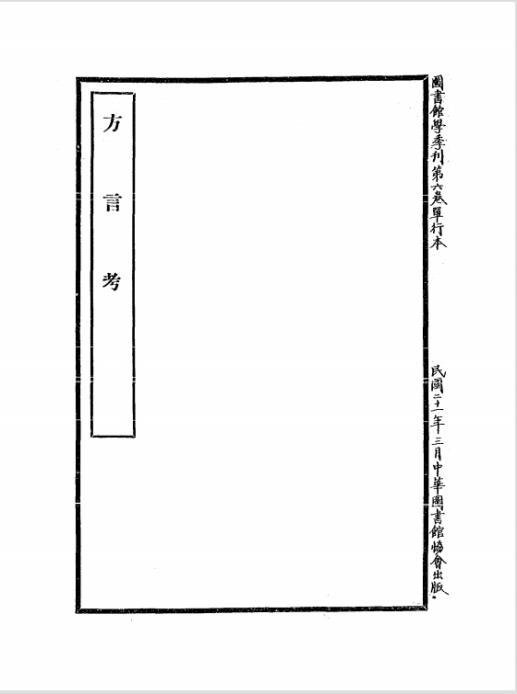
Cui Ji devoted himself to organizing dialect literature. In 1932, he completed the five-volume Fangyan Kao (A Study of Dialect Books, full title A Catalogue of Ancient Dialect Books), which was published as one of the office’s achievements in the March 1932 issue of Library Science Quarterly (Vol. 6, No. 2). As shown in Figure 2, “Fangyan Kao” appears as the first item in the issue’s table of contents. Later that year, the Library Association of China issued a stand-alone edition of Fangyan Kao (see Figure 3). The work systematically surveyed and consolidated dialect-research books across the dynasties. Cui Ji classified the 47 dialect books he collected into five major categories: those belonging to Yang Xiong’s Fangyan (8 titles), the Xu Fangyan (Continued Dialects) tradition (9 titles), works of vernacular philological research (13 titles), the Xin Fangyan (New Dialects) tradition (4 titles), and works on local dialects (13 titles). Fangyan Kao not only listed the titles but also recorded each book’s editions in detail and gathered a wealth of valuable prefaces, postfaces, author’s prefaces, and synopses by renowned scholars.
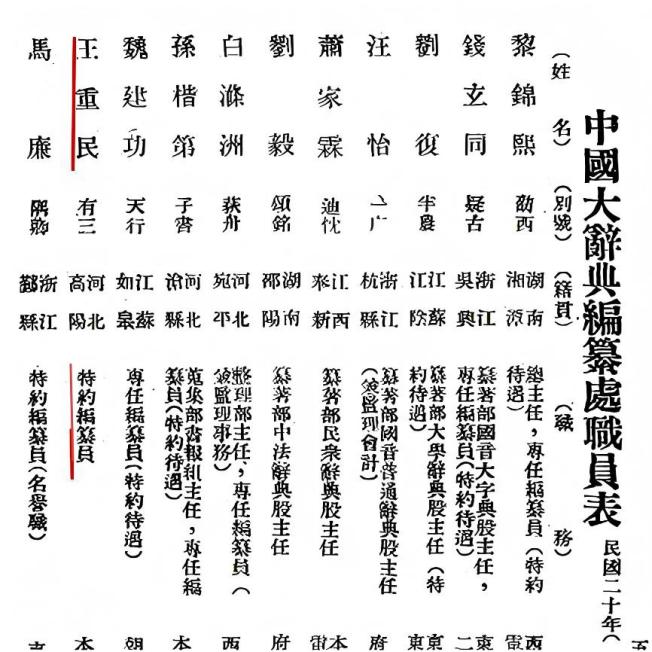
Figure 2: Original image from Kongfz.com
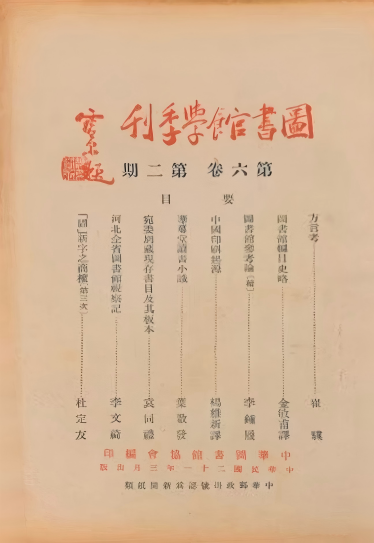
Figure 3: Cover of the stand-alone edition of Fangyan Kao
Wang Zhongmin, a special-contract compiler at the office, wrote the preface for the stand-alone edition. The preface is concise, yet it conveys a great deal of information about the Compilation Office and about Cui Ji. Below we follow the order of Wang’s preface in our narrative.
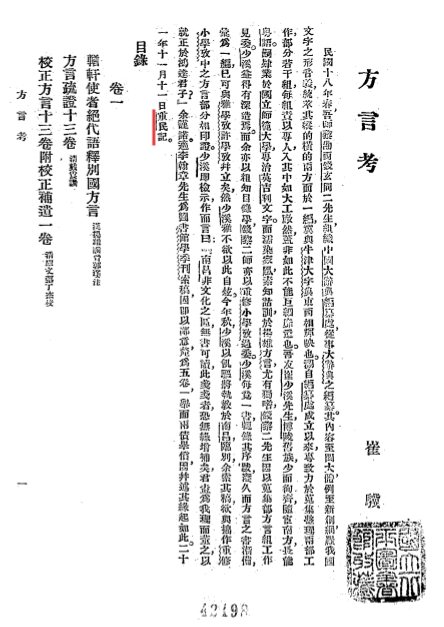
Wang Zhongmin’s preface is shown in the figure on the right and is reproduced below:
Wang Zhongmin's preface to Fangyan Kao
In the spring of the 18th year of the Republic [1929], my teachers Li Shaoxi (Jinxi) and Qian Xuantong organized the Compilation Office for the Great Chinese Dictionary, devoted to compiling the great dictionary. Its content is most vast and most original, encompassing the form, sound, and meaning of our nation’s characters, gathering both the vertical and horizontal dimensions into a single work, in the hope that it might shine alongside the Oxford English Dictionary as the eastern counterpart to the western. Since the establishment of the office, it has concentrated on two efforts — collection and organization — divided into several groups, each entrusted to a dedicated person. Entering it is like entering a great factory; only thus can no detail be omitted. My friend Mr. Cui Shaoxi, of an old Boling lineage, was diligent in his youth, traveled south with his official father, and grew up able to speak Cantonese. He went on to study at the National Normal University, specializing in English. Steeped in his family’s scholarly tradition, he had long been familiar with classical exegesis, and was particularly fond of Yang Xiong’s Fangyan. Messrs. Qian and Li therefore entrusted him with the dialect group of the collection division, and Shaoxi gained much advanced training thereby. As I had some elementary grasp of bibliography, my two teachers Qian and Li also entrusted me with the Revised Study of Elementary Learning (Chongxiu Xiaoxue Kao). Each time Shaoxi finished a book, he would record its prefaces and postfaces; over time the dialect books grew gradually complete, and once compiled into a single volume, the work could already stand alongside the Yaxue Kao and the Xuxue Kao — yet Shaoxi was not at all inclined to flaunt it. This autumn, Shaoxi, on a meager stipend, was about to take up a teaching post in Nanchang. At parting, I asked him for his manuscript, hoping to compare it with the dialect portions of my own Revised Study of Elementary Learning. Shaoxi at once took it out and showed it to me, saying: “Nanchang is no place of culture; there are no books to read there. This trifling work, I fear, will have no chance of further additions. Why not edit and arrange it for me, so that it may be brought before the discerning gentlemen for correction?” I respectfully agreed. As it happened, Mr. Li Hanzhang was soliciting submissions for the Library Science Quarterly, so I took the liberty of organizing it into five volumes, fulfilling both obligations at once — and so I record its origins here.
The preface states that Cui Ji “went on to study at the National Normal University, specializing in English,” confirming that he was a student in the English Department of Beijing Normal University. It also says he was “steeped in family tradition, long familiar with exegesis, and especially fond of Yang Xiong’s Fangyan. Messrs. Qian and Li therefore entrusted him with the dialect group.” Thus Cui Ji was assigned by Qian and Li to lead the dialect group of the collection division, while Wang Zhongmin was entrusted with the Revised Study of Elementary Learning. The preface also summarizes how Fangyan Kao was written: “Each time Shaoxi finished a book, he would record its prefaces and postfaces; over time the dialect books grew gradually complete, and were compiled into a single volume.” Wang further mentions that Cui Ji handed his draft over to him just as Mr. Li Hanzhang was “soliciting submissions,” whereupon Wang “took the liberty of organizing it into five volumes.” Wang Zhongmin’s faithful keeping of his promise — willingly “tidying up” a friend’s manuscript — exemplifies the character of a true gentleman, admirable and worthy of respect.
Wang Zhongmin held Cui Ji’s Fangyan Kao in very high regard, praising that it “could already stand alongside the Yaxue Kao and the Xuxue Kao.” The Yaxue Kao and Xuxue Kao are landmark works of Qing-dynasty philological scholarship, leading the bibliographic study of the Erya and the Shuowen respectively. Wang frankly stated, “I asked for his manuscript, hoping to compare it with the dialect portions of my own Revised Study of Elementary Learning.” As a major modern figure in bibliography and philology, Wang’s high regard for Fangyan Kao shows the considerable scholarly value of the work. Wang also praised Cui Ji for being “not at all inclined to flaunt” his accomplishment after completing Fangyan Kao, affirming his dedicated, humble scholarly attitude.
“My friend Mr. Cui Shaoxi, of an old Boling lineage, diligent in his youth, who traveled south with his official father and grew up able to speak Cantonese” — as Wang said. Cui Ji’s ancestral home was Yanshan County, Hebei (today’s Qingyun County, Shandong). His father, Cui Bingyan, was a jinshi of the special examination of the 30th year of the Guangxu reign (1904), and in 1905 was assigned as magistrate of Chaoyang County, Guangdong. His mother, of the Cheng family, was from Nanchang — the eldest daughter of Cheng Weiqing, a juren of the Guangxu era and a magistrate-in-waiting in Guangdong. Cui Ji and his elder brother Cui Hao were both born in Guangdong. In 1909, Cui Bingyan resigned and moved the family to Nanchang. In the early Republic, Cui Ji’s parents both passed away from illness; the brothers were still young. Their eldest maternal uncle, Cheng Zhen — Cui Ji’s mother’s eldest younger brother — generously took up the responsibility of raising and educating them. Cheng Zhen (courtesy name Xiehua, 1884–1961) had been thoroughly schooled in the Four Books and Five Classics, received a complete classical education, and was among the earliest cohorts admitted to the Imperial University of Peking, later studying in Japan to receive a modern education. He served as principal of Jiangxi Provincial No. 1 High School, as a member of the Beiyang government’s House of Representatives, and later as a professor in a university literature and history department. That Cui Ji was “steeped in family tradition and long familiar with exegesis” thus follows naturally. “This autumn, Shaoxi, on a meager stipend, was about to take up a teaching post in Nanchang.” After graduation, Cui Ji returned to Nanchang, but did not immediately teach — instead serving as a secretary at the Jiangxi Provincial Department of Education. The following year he married his uncle’s eldest daughter, Cheng Tongliu, and a year later they joyfully welcomed a son, naming him Cui Sihao in memory of his uncle Cui Hao. Both Cui Hao and Cui Ji had attended Xinyuan Middle School in Nanchang. In middle school Cui Hao embraced socialism and edited the inaugural issue of the Nanchang Communist Youth League publication Hongdeng (Red Lantern); shortly after entering Beijing Normal University, he died of typhoid at the age of just 20. After returning to Nanchang, Cui Ji wrote and published A Chronological Biography of Xie Fangde, A Draft Concise Chronological Biography of Yang Wanli, and other works.
At the end of 1937, Cui Ji bid farewell to his family and traveled far to England for further study.
May 11, 2026
(About the author: Cheng Shiyin is a grandson of Cheng Zhen. He graduated from Jiangxi Institute of Technology in 1982 and now lives in Shenzhen. This article is reproduced from the Jiangxi Provincial Government Office of Literature and History Research.)