
Cuckoo's Cry of Blood, Candle Burning to Ashes: Remembering Tsui Chi, a Scholar in Britain Who Told Chinese Stories in English
Author: Cheng Shiyin
In the autumn of 1932, Tsui Chi (courtesy name Shaoxi) graduated from the English Department of Beijing Normal University. Bidding farewell to the Great Chinese Dictionary Compilation Office, he returned to Nanchang, Jiangxi. Instead of teaching immediately, he was hired as a secretary for the Jiangxi Provincial Department of Education. The following year, he married the eldest daughter of his eldest maternal uncle, Cheng Zhen. Tsui Chi excelled in his work and, in his spare time, continued to write prolifically, completing drafts such as A Chronological Biography of Xie Fangde and A Draft Concise Chronological Biography of Yang Wanli. In the winter of 1937, he was sent by the Jiangxi Provincial Department of Education to study and conduct investigations in Britain. Due to the outbreak of the Second World War, Tsui Chi remained stranded in Britain for thirteen years. Under the English name TSUI CHI, he dedicated himself to writing, telling Chinese stories to the Western world in English. In 1950, this exceptionally talented scholar unfortunately passed away in Britain at the young age of forty-one.
Tsui Chi’s Works and Translations: Acclaimed in Britain
A Short History of Chinese Civilization, published in London in 1942, was Tsui Chi’s masterpiece after arriving in Britain. This was the first history of China written in English by a Chinese scholar to be published in Britain. The British poet Laurence Binyon wrote the preface for the book, noting: “Books about China have been written in abundance by Europeans… This book is written by a Chinese in clear and fluent English… It is a story of a remote and legendary past, of glory and disaster, but it gives also a full account of the modern period.” H. G. Wells, the famous British publisher and writer, praised Tsui Chi’s A Short History of Chinese Civilization as the best volume for recording Chinese history. The book won high acclaim from academic circles in the US, Britain, and other European countries. It was reprinted multiple times, adopted as a university textbook, and translated into German and several other languages. This general history of China, born amidst the smoke of World War II and written in English by a Chinese scholar residing in Britain, became a rare “Chinese voice” that could be heard directly in the Western world at that time, free from the prejudices and distortions relayed by Western missionaries or colonial officials.
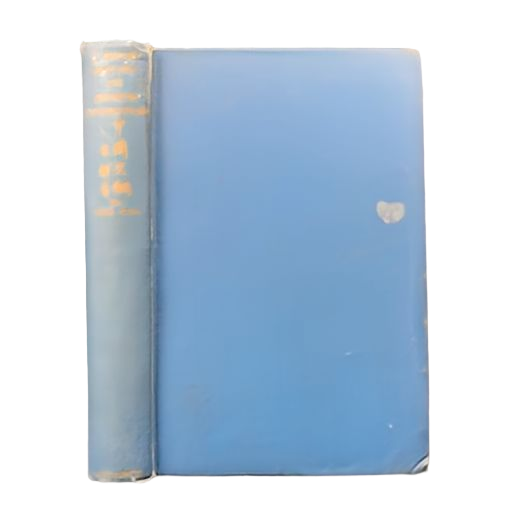
Cover of A Short History of Chinese Civilization
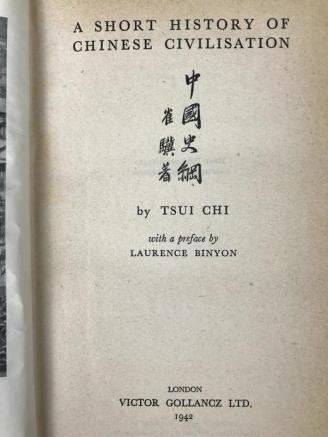
Title page of the 1942 London first edition
Tsui Chi wrote a children’s reader titled The Story of China, illustrated by Carolin Jackson, which was published by Puffin Books in 1945. Tsui Chi introduced China to British children in a storytelling format, with tales encompassing history, culture, customs, folklore, and more. The illustrations were lively and vividly colored. Tsui Chi also recounted the story of Chinese soldiers and civilians building the Burma Road: “The length of the Burma Road inside China is 650 miles. This road was built through dangerous high mountain gorges and crossed some of the most treacherous rivers in the world. More than 300 bridges were built along the Burma Road. During construction, many workers unfortunately lost their lives. But the workers were willing to risk their lives to build this road, because through it, guns and ammunition could be imported into China to defend against the Japanese invaders.” The picture book enabled British children to perceive China not only as a country with an ancient civilization but also as a modern nation courageously fighting against fascism. This publisher, Puffin, was established specifically for wartime children, and since children’s books are often read aloud by parents, The Story of China helped many more British people understand China.
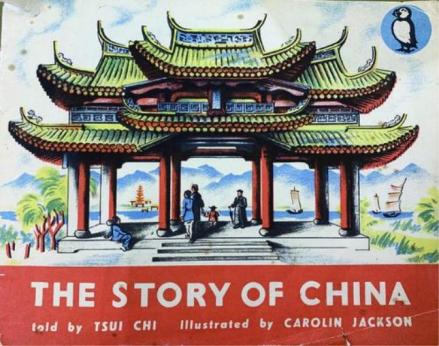
Cover of The Story of China
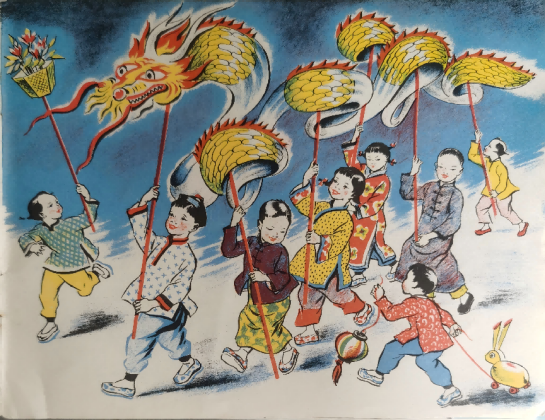
Illustration from The Story of China (Lantern Festival Dragon Dance)
Tsui Chi also contributed to the appreciation of modern Chinese literature by the British. He translated the representative work of the Chinese female writer Xie Bingying, Autobiography of a Chinese Girl. Based on the author’s diary, the novel recounts her experiences in the National Revolutionary Army during the Northern Expedition (1926 to 1928), showcasing the lives of young revolutionary Chinese women. The poet Gordon Bottomley wrote a preface for Tsui Chi’s translation, stating that the book starts by depicting a girl from a remote village who later becomes “the representative of a national new force and new mission.” Stanley Unwin, the famous British publisher and writer, spoke highly of the English proficiency of several Chinese writers and translators at the time. Unwin not only praised the English attainments of Lin Yutang, Hsiung Shih-I, and Chiang Yee, but also explicitly commended Tsui Chi’s translation of Xie Bingying’s Autobiography of a Chinese Girl. Unwin believed that even if certain Chinese literary works were handed to native British scholars to translate, they might not have been done better than by the Chinese translators themselves 1. Tsui Chi’s translation resonated with British and American readers during World War II, undergoing six printings from its initial publication in 1943 to 1948, achieving widespread dissemination among the general public in Britain and America 2.
In addition, in collaboration with the scholar Gerald Bullett, Tsui Chi translated sixty poems from Fan Chengda’s Four Seasons of Pastoral Life, published by Cambridge University Press under the title The Golden Year of Fan Cheng-Ta. He also regularly wrote scripts for the BBC, introducing classical Chinese novels and poetry.
Tsui Chi also worked quietly to promote exchanges between Chinese and British scholars. In 1945, Oxford University intended to invite Chen Yinke to lecture in Britain. Tsui Chi made detailed recommendations on salary, staffing, and funding details based on the actual situation. Chen Xiying’s diary entry for March 1, 1945 records:
At half-past twelve, Cui Shaoxi came. Shortly after, Hughes arrived. I invited them to lunch at the Hong Kong Restaurant. I talked with him about Yinke’s project to translate the Tang History. He said that for this project to succeed, besides the two of them, they would need four assistants. The Oxford Professor of Chinese has a salary of only seven hundred pounds, which is certainly too little; it must be increased to twelve hundred pounds, the same as other professors. The four assistants should each receive seven hundred and fifty pounds. In addition, there must be a clerk. All in all, four thousand pounds will be needed.
…He went to the House of Commons this afternoon to talk with the China Committee about Sino-British cultural cooperation.
The History of Chinese Literature, which Tsui Chi spent years of painstaking effort compiling, was unfortunately never completed.
The True Character of a Scholar: Praised by Friends
How was Tsui Chi’s life in Britain? Two entries in the diary of Chen Xiying, who was then in charge of the Sino-British Cultural Association, leave a faithful record:
April 29, 1944
Met with Cui Ji (Shaoxi). Went with him to his hotel and talked for an hour. He is from Hebei, was born in Guangdong, and grew up in Jiangxi. He attended middle school in Jiangxi and later entered the English Department of Beijing Normal University. Xiong Shihui sent him to Britain. Since arriving here, he has made a living by writing books, selling articles, and writing broadcasts for the BBC. He is currently writing a history of Chinese literature.
May 8, 1944
“At noon, Hsiung Shih-I called. We agreed to go to the Shanghai Restaurant for lunch and talked for over an hour. He said Tsui Chi served as a secretary in the Jiangxi Provincial Department of Education. The Department sent him abroad, giving him several thousand yuan, and Xiong Shihui also gave him several thousand yuan. He came here together with Li ()mian. Since arriving, he has lived in Hsiung’s home, spending the whole day in the library. He is extremely frugal with his pocket money. Although his income from writing books is not much, he lives very simply and is thus able to support himself. Cui is a pure scholar. He understands nothing of worldly affairs; he cannot find his way around when he goes out and often causes jokes.”
Xiong Shihui was the Chairman of the Jiangxi Provincial Government who governed Jiangxi for ten years. “Xiong Shihui sent him to Britain” means, in other words, that Tsui Chi came to Britain on public funding. Once the public funds were exhausted, he “made a living by writing books, selling articles, and writing broadcasts for the BBC.” Earning a living by writing in a foreign land is unimaginably difficult. Even though A Short History of Chinese Civilization was published in multiple languages and generated royalty income, academic works have a small audience; academic publishing has always brought fame rather than profit, and the royalties were meager. Tsui Chi fell into financial distress after his government funding ran out. The History of Chinese Literature he was writing was another academic work, requiring immense energy but yielding little financial return.
The image of Tsui Chi as a “pure scholar” is vividly portrayed: worldly-wise in nothing, living extremely simply, losing his way whenever he went out, and constantly causing jokes. Aside from his ability to read and write, he indeed lacked the skills to earn other side income. Later researchers found, by comparing the catalogs of Oxford University, Cambridge University, and the School of Oriental and African Studies (SOAS) at the University of London, that Tsui Chi had borrowed a large number of unpublished photographs from the Qing imperial collection and early British missionary manuscripts in order to write A Short History of Chinese Civilization. No wonder he “spent the whole day in the library.”
Hsiung Shih-I (1902–1991), a native of Nanchang, was Tsui Chi’s senior in the English Department at Beijing Normal University. Tsui Chi and Hsiung Shih-I and his wife were old acquaintances from Nanchang. Hsiung had studied and later taught at Nanchang No. 1 Middle School, where Tsui Chi’s father-in-law, Cheng Zhen, was the fourth principal. Hsiung’s father-in-law and Tsui Chi’s father-in-law were both famous figures in Nanchang’s educational circles. Hsiung Shih-I and Chen Xiying were old acquaintances. Hsiung achieved fame at a young age, with several translated works published upon university graduation. Chen Xiying, then President of Wuhan University, had wished to hire Hsiung as a Chinese professor at Wuhan University, but this was aborted because the Ministry of Education required professors to have studied in Europe or America. The proud Hsiung Shih-I resigned from his job and went to Britain at the end of 1932 to pursue a doctoral degree. Hsiung was a successful exemplar of “earning a living by writing.” After arriving in Britain, he wrote the English play Lady Precious Stream, which became a sensation in Britain, running for over nine hundred performances across three years. Its staging on Broadway in New York in 1935 was also a great success, and the British called him the “Oriental Shakespeare.” Hsiung was a prolific writer, with works such as The Western Chamber (translation), The Professor from Peking (play), The Bridge of Heaven (novel)… With fame and fortune achieved, he no longer needed to pursue a doctoral degree. Chiang Yee (1903–1977), from Jiujiang, Jiangxi, pen name “The Silent Traveller,” was also a close friend of Tsui Chi. Writing in both Chinese and English as a poet, painter, writer, and calligrapher, Chiang Yee took Britain by storm with his twelve “Silent Traveller” travelogues, which blended prose, ink wash paintings, calligraphy, and poetry to pioneer a cross-cultural writing paradigm of combined text and imagery. His debut work, The Silent Traveller in Lakeland, was reprinted eight times within a year. Chiang Yee also wrote scholarly books in English, such as Chinese Calligraphy and Chinese Eye… Hsiung Shih-I and Chiang Yee were a few years older than Tsui Chi and had arrived in Britain earlier, gaining fame sooner. The publication of Tsui Chi’s works was aided by their introductions, and Tsui Chi in turn promoted their works; for instance, in the introduction to his English translation of Autobiography of a Chinese Girl, Tsui Chi “asked British readers to pay attention to the works written in English by Chinese writers since the outbreak of the war, especially the two novels by Hsiung Shih-I and the two by Lin Yutang, as they explained the historical background of modern China.”
When Tsui Chi first arrived in London, he lived in an old-style brick building in Hampstead, at 50 Upper Park Road, neighboring Hsiung Shih-I and not far from Chiang Yee’s residence. Nearby also lived the students Xiao Qian and Yang Xianyi, who would later become famous writers. This Chinese cultural circle was compared by their British counterparts to the “Bloomsbury Group” and played an active role in promoting Sino-British cultural exchange. Later, Hsiung, Chiang, and Tsui moved to Oxford and were recognized as the three most famous Chinese scholars. Their works in various cultural fields such as drama, art, and history helped the British understand China and the Chinese people. Hsiung, Chiang, and Tsui were all from Jiangxi, and their outstanding achievements in telling Chinese stories in Britain form a brilliant page in the cultural history of Jiangxi and China. Within this circle of Chinese writers in Britain, Tsui Chi was not the protagonist; he was humble and soft-spoken, more often a listener sitting quietly in a corner, yet his scholarly character and his sincerity toward his friends were highly respected by them.
Hsiung Shih-I recalled that when the British translator Arthur Waley translated an abridged version of Journey to the West as Monkey, it was full of errors. “My friend Tsui Chi, who had written a short history of Chinese culture in English (named a short history, but actually a large volume)… drew up a list of corrections for him, listing more than a hundred items.” This shows Tsui Chi’s candid and straightforward nature, revealing the true integrity of a scholar.
A Longing for Home from Ten Thousand Miles Away: An Incurable Illness
Before Tsui Chi came to Britain, his younger son had not yet been born. Separated by war, he missed his wife and children ten thousand miles away at all times. On August 15, 1945, Emperor Hirohito of Japan announced unconditional surrender. The usually reserved and composed Tsui Chi wrote excitedly:
We Chinese living in exile abroad could hardly contain our excitement; we really wanted to hug each other. Such an occasion is rare in a lifetime, and it must be celebrated!
The word “exile” contains so much bitterness and homesickness for Tsui Chi. He could finally return to the home he dreamed of. After the victory of the war, National Chung Cheng University relocated from rural Taihe to the newly built suburban Nanchang. His wife, Cheng Tongliu, worked in the library of Chung Cheng University, and his father-in-law, Cheng Zhen, was a professor in the literature and history department. The drifting and turbulent life was over; only his younger son was now in elementary school, his father-in-law was over sixty, and the family was looking forward to Tsui Chi’s early return.
Tsui Chi spent all his savings to buy a set of the Encyclopædia Britannica, planning to use it to continue his writing and research upon returning to China. The expensive Encyclopædia Britannica was usually collected by institutions like libraries and was rarely purchased by individuals, especially by a drifting wanderer in financial straits.
Disaster struck when Tsui Chi was soon diagnosed with renal tuberculosis during a doctor’s examination. He was immediately hospitalized for treatment, later transferring to the Margate Sanatorium in Kent for two years, and then returning to Oxford to recuperate for another two years, during which one of his kidneys was surgically removed. His friends all thought he was suffering from pulmonary tuberculosis, not realizing it was the more dangerous renal tuberculosis. During this period, Tsui Chi endured pain and loneliness, and with astonishing willpower, he wrote without ceasing, completing some of his drafts on his sickbed.
Tsui Chi’s family in Nanchang repeatedly urged him to return, but his physical condition forced him to push back his plans time and again. After the war, Chung Cheng University faced a shortage of faculty. Through his father-in-law’s mediation, Tsui Chi received a letter of appointment as a history professor at Chung Cheng University in the summer of 1948, but his illness prevented him from taking up the post on time. In December of that year, Tsui Chi’s name was still on the faculty list of Chung Cheng University as a history professor. In December 1949, Tsui Chi received a letter from his father-in-law asking for financial assistance: “If there are royalties, or any surplus, could you arrange to send back one or two hundred pounds? Then the immediate problems for me, Tongliu, and the children can be temporarily resolved.” Tsui Chi had lost his parents in childhood and was raised by his uncle (later father-in-law). His father-in-law was an insightful and responsible scholar who studied at the Imperial University of Peking in his youth, studied at Keio University in Japan, became the principal of the Provincial No. 1 Middle School at thirty, and served as a member of parliament; if he were not completely out of options, he would not have made such a request. What Tsui Chi did not know was that his father-in-law had already lost his job. In May 1949, Chung Cheng University, where his father-in-law taught, was taken over by the new government, and in August it was renamed Nanchang University; his sixty-five-year-old father-in-law was not retained. His father-in-law and wife also could not have imagined that Tsui Chi was gravely ill and unable even to pay his medical expenses, frequently relying on Hsiung Shih-I’s family for assistance. Tsui Chi understood his responsibilities as a husband and father, but far away overseas, impoverished and sick, he was truly powerless to help. He felt helpless and guilty. Tsui Chi had suffered the pain of losing his parents in childhood; his elder brother Cui Hao had gone to the English Department of Beijing Normal University two years before him and died of typhoid before graduating. The thought of his two sons losing their father made his heart wring even more.
The following year, the Korean War broke out, and Tsui Chi’s family was anxious, urging him to hurry back. Tsui Chi resolved to return despite his illness, writing back that he had booked a boat ticket and would set off in December together with Hsiung Shih-I’s second son.
Tsui Chi could not return; holding the boat ticket, he could not board the ship home. On October 28, 1950, he passed away in Oxford due to the failure of treatments for renal tuberculosis, at the young age of forty-one.
Tsui Chi’s untimely death was deeply lamented by his Chinese and foreign cultural friends. He was recognized by his friends as an outstanding Chinese historian in Britain, known for his vast knowledge, modesty, and kindness. He cared nothing for fame or wealth, and his scholarship and character were praised by all. Hsiung Shih-I and Chiang Yee organized and arranged the funeral, with Hsiung presiding, and Tsui Chi’s Chinese and foreign friends attended. Hsiung and Chiang bought a burial plot for him in Botley Cemetery in Oxford. The Chinese inscription “Tomb of Mr. Cui Shaoxi” on the white marble tombstone was written by the modern female writer Ling Shuhua.
Tsui Chi’s poet friend Gerald Bullett wrote a poem titled Tsui Chi to mourn him: “Weary of that long sickness, he has risen / And left us… / And of the dark he has no more to fear, / With a child’s laughter on his face, he goes / Into the light.”
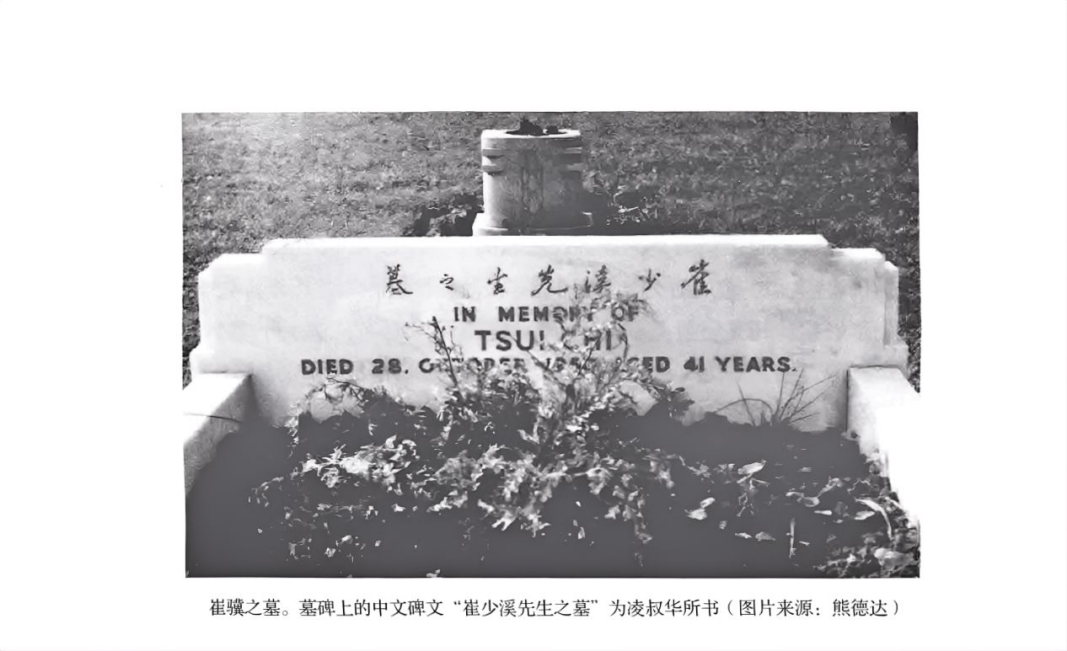
Tomb of Tsui Chi. The Chinese inscription "Tomb of Mr. Cui Shaoxi" on the tombstone was written by Ling Shuhua (Image source: Xiong Deda)
Loneliness After Death: A Lasting Cultural Legacy
Six months after Tsui Chi’s death, Hsiung Shih-I’s wife Dymia Hsiung published her English autobiographical novel Flowering Exile. Flowering Exile tells the story of the Lau family, Chinese intellectuals in Britain during World War II, with the tragic fate of their friend, the scholar Song Hua, serving as a subplot. In the end, Song Hua contracted an incurable disease and died. Book reviews noted that Song Hua was based on Tsui Chi.
Shortly after Tsui Chi’s death, Xu Yuanchong, who had completed his studies at the University of Paris in France and was returning to China, passed through London. Hsiung Shih-I entrusted him with bringing some of Tsui Chi’s belongings back to his family. Facing the sorrowful and hopeful eyes of Tsui Chi’s wife and father-in-law, Xu Yuanchong stammered and dared not speak, fearing they could not bear the blow. It was nearly a year later that Tsui Chi’s family finally confirmed the news of his death: “The letter reporting his death was forwarded by his neighbor.” 3
Misfortunes never come singly. The Encyclopædia Britannica sent back by Tsui Chi was purchased by the Jiangxi Provincial Library, and the family used the money to buy a room in Yangzixiang, Nanchang. Unexpectedly, a massive fire destroyed the residence, dealing another heavy blow to their lives.
Chiang Yee and Hsiung Shih-I successively returned to China for family visits. They were already world-renowned bilingual Chinese writers and received warm welcomes and hospitality; Chiang Yee was even invited to state banquets. Chiang Yee met with his old friends of several decades, such as Wu Shichang, Ye Junjian, Yang Xianyi… literary friends from their days in London or Oxford. After their deaths, both Chiang Yee and Hsiung Shih-I were buried in China, fulfilling their wish to return to their roots. In recent years, the achievements of Hsiung and Chiang have been re-evaluated, and some of their English works have been successively translated into Chinese and published.
Only Tsui Chi, Cui Shaoxi, still lies alone in Botley Cemetery in Oxford, ten thousand miles away. The Chinese and English inscriptions on the white marble tombstone standing before the grave have become blurred after over seventy years of weathering. There are no flowers before the grave, and no one visits to pay respects. Fortunately, the works he left behind, such as A Short History of Chinese Civilization, are still preserved in many libraries overseas, and occasionally appear in the domestic second-hand book market. The spirit carried by the ink has never faded.
References
- Hsiung Shih-I: The Lost “Chinese Shakespeare”, by Zheng Da. Beijing: SDX Joint Publishing Company, July 2023. ISBN 978-7-108-07601-4.
- Chiang Yee and His Circle: Art, Creative Writing, and Social Networking of Chinese Writers and Artists in Britain, 1930-1950, edited by Paul Bevan, Anne Witchard, and Zheng Da; translated by Zhou Xiaojin et al. Shanghai: Oriental Publishing Center, November 2023. ISBN 978-7-5473-2271-0.
- Memoirs of Hsiung Shih-I, compiled by Chen Zishan. Beijing: Dolphin Books, September 2010. ISBN 978-7-5110-0394-2.
- Selected Diaries and Letters of Chen Xiying, annotated and compiled by Fu Guangming. Shanghai: Oriental Publishing Center, December 2022. ISBN 978-7-5473-2024-2.
(About the author: Cheng Shiyin is a grandson of Cheng Zhen. He graduated from Jiangxi Institute of Technology in 1982 and now lives in Shenzhen. Tsui Chi was Cheng Shiyin’s paternal aunt’s husband.)
-
Selected Diaries and Letters of Chen Xiying, December 5, 1944. Chen Xiying recorded his exchanges with members of the British publishing industry. ↩
-
“Literary Translation and Reception in Special Times: A Study of the Dissemination and Reception of Autobiography of a Chinese Girl in Britain and the US in the 1940s,” by Xu Min and Geng Qiang, Fudan Journal of Foreign Languages and Literature, Vol. 1, 2022. ↩
-
Letter from Xu Yuanchong to Zheng Da, April 8, 2014, cited in Hsiung Shih-I: The Lost “Chinese Shakespeare” by Zheng Da. ↩