
Wang Pu
Wang Pu
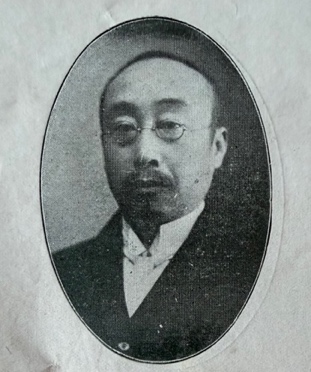
Wang Pu was a very active figure in the early period of the National Language Movement. He was a disciple of Wang Zhao and highly esteemed Wang Zhao’s Mandarin Phonetic Alphabet. In 1902, he petitioned Zhang Baixi, the Minister of Education at the time, to approve the promotion of the Mandarin Phonetic Alphabet. In his petition, he stated that this was a convenient method to enable everyone to read books, newspapers, and imperial edicts. In 1902, Wang Zhao rented a house in Biaobei Hutong in the East City of Beijing and established the Mandarin Alphabet Charitable School, where Wang Pu taught.
In 1913, the Commission on the Unification of Pronunciation was established, and Wang Pu was elected as a member from Zhili. In the later stages of the conference, due to the resignation of Chairman Wu Jingheng and the sick leave of Vice Chairman Wang Zhao, Wang Pu was elected as the acting chairman. He presided over the voting of pronunciation for 6,500 Chinese characters one by one and other proposals, completing the conference. He also compiled the proposals into the book “National Pronunciation Character Check” and published it. After the closing of the Commission on the Unification of Pronunciation, due to political changes, all proposals were shelved. Wang Pu and 25 other members organized the “Association for the Promotion of Unification of Pronunciation” and petitioned the Ministry of Education in January 1915 to implement the phonetic alphabet approved by the Commission. The Ministry replied that “personnel have been dispatched to sort it out,” but in reality, no one paid attention. In November of the same year, Wang Pu and others petitioned again and reported that members would donate funds to establish a Phonetic Alphabet Training Institute in Jingzhao first. The Ministry approved it as a “pilot project,” and Wang Pu later served as the director, promoting the phonetic alphabet.
In 1919, the Preparatory Committee for the Unification of the National Language (abbreviated as “Guoyuhui”) was established, and Wang Pu was appointed as a member.
In 1920, Wang Pu recorded the “Chinese National Pronunciation Gramophone Records” in Shanghai, all using Beijing pronunciation.
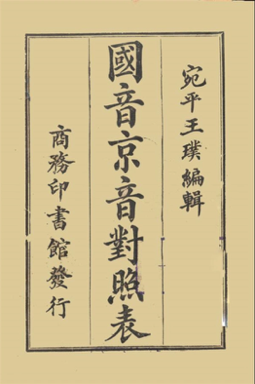
In October 1921, Wang Pu’s work “Comparison Table of National Pronunciation and Beijing Pronunciation” was published by the Commercial Press.
In 1922, the Committee for Simplified Chinese Characters was established, and Wang Pu served as a member.
In 1923, Wang Pu proposed the “Motion to Revise the National Pronunciation Dictionary” at the Guoyuhui.
In 1925, the meeting of the “National Pronunciation Dictionary” Revision Committee decided to nominate Wang Pu as one of the six drafting members.
During the same period, Wang Pu also served as a lecturer in the Department of Chinese Literature at Beijing Normal University, National Peiping Women’s University, and Women’s Normal University.
In January 1928, Wang Pu went to Japan and later passed away there.