

Wang Yi, courtesy name Yian
Wang Yi (February 3, 1878 – 1960), also known as Yian, was a prominent Chinese linguist and educator from Hangzhou, Zhejiang.
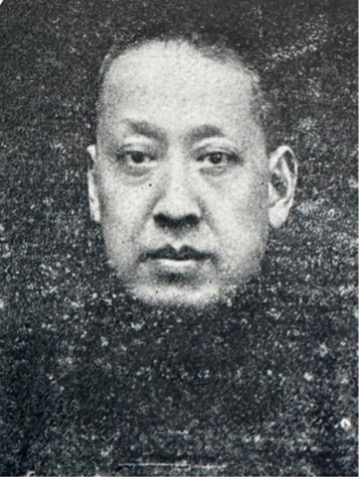
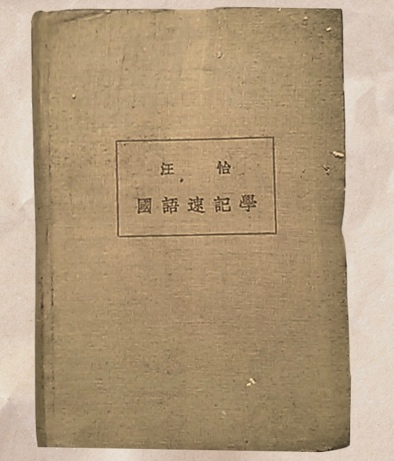
Wang Yi was born in Nanxun, Huzhou (though born in Hunan due to family travels). His father was a scholar, and Wang spent much of his childhood immersed in classical literature. At the age of 10, he moved to Shanghai and later to Wuchang. In Wuchang, his father worked at the Lianghu Academy, where Wang had access to a vast collection of books. Encouraged by his relative Wang Kangnian—a famous reformer and journalist—Wang Yi also studied foreign languages and mathematics at the Ziqiang School.
Innovation in Shorthand
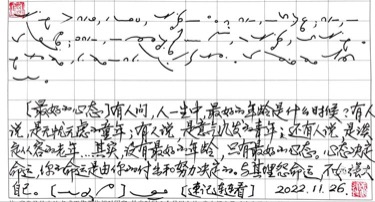
Wang Yi is best known for his pioneering work in Chinese shorthand. Developing a keen interest in phonetics from a young age, he found traditional characters difficult to master and ancient phonetic methods cumbersome. Drawing inspiration from Western shorthand techniques, he invented a new Chinese Shorthand System (Wang’s Shorthand). He established the National Language Shorthand Institute and dedicated much of his life to promoting this system across China and later in Taiwan.
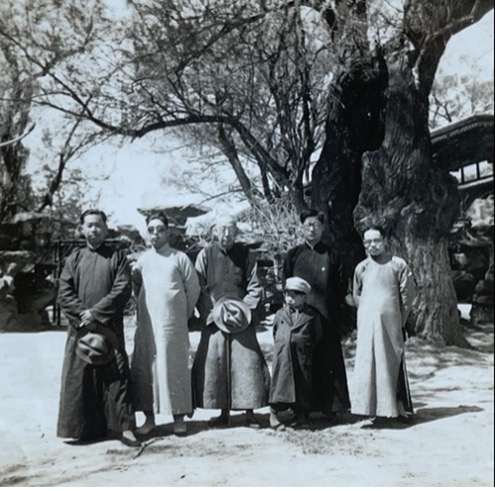
Career in the National Language Movement
Throughout his career, Wang Yi held various educational and official positions, including middle school teacher, principal of the Yingkou Commercial School, and editor-in-chief of the New China Daily. In the early years of the Republic of China, he served in the Ministry of Education and lectured at Beijing Normal University.
He played a pivotal role in the National Language Movement:
- Phonetic Unification: As a member of the “Commission on the Unification of Pronunciation,” he submitted influential proposals for phonetic symbols.
- National Language Preparatory Committee: He was a key member in the discussions leading to the promulgation of Zhuyin (Phonetic Symbols) and served as a special investigator for their implementation in various provinces.
- Gwoyeu Romatzyh: He was a member of the “Shurenhui” (Society of a Few Men), which was instrumental in developing the National Language Romanization system.
Dictionary Compilation and Later Years
In 1928, Wang Yi became the director of the Common Vocabulary Section at the China Dictionary Compiling Office. During the Second Sino-Japanese War, he served as the acting director-general. Despite the hardships of the war, he successfully oversaw the compilation of the eight-volume National Language Dictionary (Guoyu Cidian), which later became the standard for the national language.
In his later years, Wang Yi moved to Taiwan with his eldest son, where he lived a quiet, retired life.
Major Works
- New Chinese Shorthand (1919)
- The Phonetics of the National Language (1924)
- Latest Chinese National Language Shorthand (1928)
- Wang Yi’s National Language Shorthand (1931)
- Vocabulary of Common National Pronunciations (1932, co-editor)
- The National Language Dictionary (8-volume edition, 1943, Editor-in-Chief)
- New Compendium of Ci-poetry Patterns (1943)
- National Pronunciation Dictionary with New Radical Index (1949)
Papers and Articles
- “How to Study National Pronunciation” (1922)
- “A Brief History of National Phonetic Symbols” (1929)
- “The Utility of National Language Shorthand” (1933)
- “Three New Tools for the Chinese Language” (1937)
Historical Research on Birth Date
Historical records often contain conflicting dates for Wang Yi’s birth. According to the diary of Qian Xuantong, a celebration for Wang’s 60th birthday (by traditional counting) was held on February 3, 1937. This allows us to trace his actual birth date back to the 22nd day of the 12th lunar month in the year Dingchou, which corresponds to February 3, 1878.