

Anecdotes of Old Friends of the "Chinese Little Daily"
Author: Yun Wang
The “Chinese Little Daily” (Guoyu Xiaobao) was the predecessor of Taiwan’s “Mandarin Daily News” (Guoyu Ribao). Many records suggest that it was founded by Wei Jiangong, which is mostly due to the fact that Wei Jiangong was the first president of the “Mandarin Daily News”. In fact, it was commissioned by the Ministry of Education of the Nationalist Government and managed by the Chinese Dictionary Compilation Office. The person who drove this project was Mr. Li Jinxi. In 1946, Li Jinxi returned to Beiping from the Northwest. At that time, he was not only a standing committee member of the National Language Promotion Committee but also the Dean of Academic Affairs and Chairman of the Chinese Department of Beiping Normal College (now Beijing Normal University). The Mandarin Language Movement had gone through a ten-year hiatus, and the core members of the original National Language Committee were scattered. Full of ambition, Li Jinxi firmly began to implement his plan: he put the Chinese Dictionary Compilation Office under the management of Beiping Normal College to advance the publication of the “National Language Dictionary” (Guoyu Cidian); he also established a National Language Training Program at Beiping Normal College to meet the demand for national language professionals. Against this background, the “Chinese Little Daily” was born in Beiping on January 15, 1947. Its masthead was inscribed by Wu Jingheng, then chairman of the National Language Committee, and Li Jinxi annotated the four characters “Guo Yu Xiao Bao” with phonetic symbols (Zhuyin Fuhao) and wrote the “Inaugural Message”. The masthead of the later “Mandarin Daily News” was inscribed by Hu Shi, with phonetic symbols annotated by Wei Jiangong—a point that many records confuse.
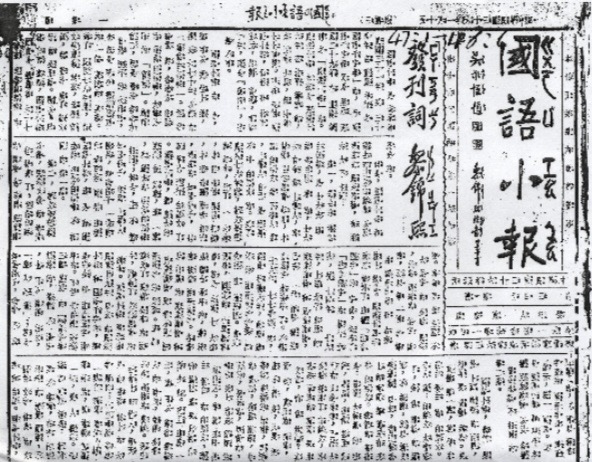
Inaugural Issue of "Chinese Little Daily"
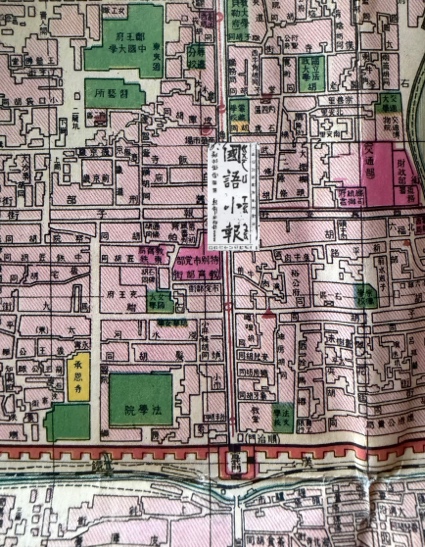
Sketch Map of the "Chinese Little Daily" Office Location
The “Chinese Little Daily” was a small-sized, 4-page, tri-weekly newspaper. Its most unique feature was that the entire text was annotated with phonetic symbols (Zhuyin). This method of reading with phonetic symbols was highly advocated by Wu Jingheng and was also the teaching method that Li Jinxi insisted on passing down to his disciples. The content of the newspaper included: national language teaching columns, domestic and international news digests, local livelihood columns in Beiping, education sector news (education bureau orders, primary and secondary school activities, literacy class notices from public education centers, etc.), popular supplements, vernacular stories, science popularization, moral essays, and reader Q&A. Its distribution was mainly targeted at: free distribution to public schools and public education centers; low-cost retail at street newspaper stalls; and subscriptions by the education bureau and various educational institutions. Its features were: (1) Content—substantial and concise, achieving more with less; (2) Language—entirely in the vernacular (Baihua), understandable even to elderly women; (3) Structure—organized orderly according to numbers; (4) Printing—character-by-character phonetic annotation, with word-linking (inter-word spacing); (5) Supplements—five existing ones, with more to be added later.
The concurrent president and publisher of the “Chinese Little Daily” was Jialin Xiao, then a standing committee member of the National Language Committee. The newspaper adopted the “word-linking method” (Cilei Lianshu) created by him for printing. Word-linking uses the “word” as the smallest unit of writing, with larger spaces between words to avoid ambiguity, similar to English. For example, “Beiping City Chinese Little Daily” in the word-linking style would be written as “Beiping City Chinese Little Daily”. In the era of classical Chinese, text was written without spaces between characters. Word-linking was advocated by the Mandarin Language Movement, and its application in publications started with the “People’s Weekly” (Minzhong Zhoukan) published by the Shandong Provincial Public Education Center, whose editor-in-chief was Liang Rongruo, and the rules of linking were mostly designed by Jialin Xiao.
The actual operator of the “Chinese Little Daily” was the Editing and Printing Director Wang Shoukang. Wang Shoukang was a student of Mr. Li Jinxi and a close friend and classmate of Jialin Xiao at Beijing Normal University. He had briefly worked at the Chinese Dictionary Compilation Office. During the War of Resistance, he chose to join the military as a civilian officer and later worked in the Social Affairs Department of the Hebei Provincial Government, responsible for transporting United Nations relief supplies from the United States to disaster areas. Having experienced the baptism of gunfire, Wang Shoukang could not bear to look directly at the suffering of the people in the disaster areas and was deeply disappointed by the civil war and the corruption and incompetence of the local bureaucracy. He lamented: “We won, and now both Japan and China are the foster sons of the United States. I heard that Japan is already slowly rebuilding its country, while we are still destroying ours, fighting and killing without end. Just you watch, in the future, that Japanese foster son will do better than us. We won’t even compare to them as foster sons, how embarrassing!” Wang Shoukang did not restrain himself in public, often mocking the political study of leaders’ writings organized by the provincial government, and felt stifled by the admonitions of his superiors, remaining depressed all day. One day, he suddenly announced to the family with joy: “I don’t have to go to Baoding anymore!” It turned out that Mr. Li Jinxi had asked him to run the “Chinese Little Daily” and concurrently serve as an associate professor in the National Language Training Program at Beiping Normal College. He could return to his old profession of language education, which was like a fish back in water.
The office of the newspaper was located at No. A-169, Xidan South Street, Beiping. This courtyard was originally part of the Ministry of Education in the early Republic of China and was now the headquarters of the Kuomintang Beiping Municipal Party Department. To focus on running the newspaper, Wang Shoukang moved his entire family to the backyard of the office. At that time, the Nationalist Government was in financial difficulties, and the “Chinese Little Daily” was initially approved for a staff of only two people—Xu Shirong and Fan Yuepei. The newspaper’s assets consisted of only one double-page and one single-page printing press. The copper molds of national characters with phonetic notation (sizes 2, 3, and 5) and a hand-cranked type-casting machine were all borrowed from the Chinese Dictionary Compilation Office. Although conditions were difficult, Wang Shoukang was very satisfied; he was often in his most pleased state in the courtyard, holding a cigarette and listening to Peking Opera. However, he did not expect that more than a year later, he would have to carry these modest belongings from Beiping to Tianjin, and then by boat to Keelung, transporting the “Chinese Little Daily” to Taiwan.
Next, let’s talk about the staff and contributors who supported the “Chinese Little Daily”.
Xu Yifei, listed as the “Editor-in-Chief” (Zhubi) on the “Staff Roster of Chinese Little Daily”, was Xu Shirong (courtesy name Zhibai), who graduated from the Chinese Department of Beiping Normal University in 1935. He published articles in the “Chinese Little Daily” under the pen names “Zhibai” or “Yifei”. Xu Shirong was a genuine old Beiping local who valued traditional etiquette. When Wang Shuda, who also worked at the Chinese Dictionary Compilation Office, began teaching at the Beiping Normal University Affiliated High School, Xu Shirong had not yet graduated, so he regarded Wang Shuda as his teacher and performed the junior’s kneeling kowtow every year during the New Year’s visit. Because of his standard pronunciation and pleasant voice, he later engaged in Mandarin teaching and pronunciation standardization for a long time, becoming one of the few experts in this field. He published the most articles in the “Chinese Little Daily,” covering a wide range of topics. Under the name “Zhibai,” he wrote commemorative articles such as “Mr. Hu Shi on Vernacular Chinese” and “Starting from the Six-One Scholar”; popular science on philology like “Changes in the Interjection ‘Ah’”, the series “Research on ‘Er’ and ‘Zi’”, “Brief Discussion of Chinese Characters”, and “On the Playfulness of Chinese Characters”; a humorous piece “Zhong Kui Eliminating Illiteracy”; dialect phonetics like “Dialect Pronunciation Description in Novels”, “The Question of Entering Tone in National Pronunciation”, “We Should Properly Edit and Print a Set of Phonetic Characters”, “What Symbol to Use for Light Tone”, and “Fanqie Pronunciation has Many Defects”; and expository essays like “Thoughts after the First Graduation of the Literacy Class in Beiping Demonstration District for Out-of-School Citizens”, and “Before and After Editing the Eighteen Lessons of Phonetic Symbols”. Under the name “Yifei”, his writings mainly explained national language knowledge, such as “Exquisite Lectures on National Language Novels”, “Selected Annotated National Language Dialogues”, “Same Pronunciation with Different Characters and Uses”, “The National Language Translation of Three Universities This Year: Understanding is Not Difficult but Tone Must Be Lively”, “Introducing Mr. Li Jinxi’s Diagram for Compiling Compound Words”, “Novels and Dramas are Good Teaching Materials”, “The Pronunciation of He and She”, “Different Pronunciations of ‘Bu’”, and “A Small Problem in Writing Characters”, as well as argumentative essays like “When Can Important News Be Written in Vernacular?”, “Thoughts on the Characteristics of Our Country’s Language from New Year Couplets”, and “On Whether Chinese Characters Should Be Written Horizontally”. Opening the “Chinese Little Daily”, almost every issue had several articles written by Xu Shirong; it should be said that he was truly the pillar of the newspaper’s editorial board.
There was also a writer under the pen name “Chengbei Gong” who published articles like “Let’s Ask Chinese Characters to Speak Up”, “Strange! Strange! Beiping People Don’t Want to Speak the National Language”, and “We Will Miss ‘Zhe’, ‘Zi’, and ‘De’”. Some say this was also a pen name of Xu Shirong, while others say it was Liang Rongruo. If it was Liang Rongruo, his boarding the same ship with Wang Shoukang to Taiwan to run the “Mandarin Daily News” would be a historical connection linking the past and the future.
Fan Yuepei was not a language specialist; he graduated from the Jiangsu Provincial Education College, known for popular education, and later dedicated his career to popular education. In the 1930s, he worked with Jialin Xiao at the Jiangsu Provincial Donghai Normal School and later followed Dong Weichuan to serve in the Shandong Provincial Public Education Center, engaging in editorial work. He wrote numerous articles and hosted or participated in the editing and publication of many books and newspapers. This time, they reunited to run a newspaper together. In the “Chinese Little Daily”, he published articles under the pen name “Pei”.
The writer who signed as “Da” or “Shankai” in the newspaper was Wang Shuda (courtesy name Shankai), a colleague of Wang Shoukang in the National Language Training Program and a compiler at the Chinese Dictionary Compilation Office. Entrusted by Li Jinxi, he and Sun Chongyi provided a large number of manuscripts in the early stage of the “Chinese Little Daily,” giving the newspaper strong support. His residence was located in Picai Hutong, Xidan, which was very close to the “Chinese Little Daily” office and was also on his daily route to work at the Normal College, so he frequently appeared at the office. Wang Shoukang’s son, Wang Zhengfang, was a primary school student at the time, and he still remembers many details from those days. Once, while playing with a ball in a room of the office, he accidentally threw the ball against the ceiling, kicking up a cloud of dust. His Uncle Wang chided him: “You have shaken down eighty years of old dust!” leaving Wang Zhengfang completely dazed. In the teaching and promotion of the national language at this stage, Wang Shoukang and Wang Shuda were indeed Mr. Li Jinxi’s right-hand men, and their cooperative relationship was very close. Wang Shuda’s main articles in the newspaper included: introducing national language knowledge like “More on Light Tone”, “Word-linking Style”, and “How to Translate Classical Chinese into Vernacular”; introducing national language characters such as “The Pioneer of the National Language Movement—Mr. Liu Jizhuang” and “In Memory of the Late Master Qian Xuantong”; sharing teaching experiences like “Several Things to Note in Phonetic Literacy Education”; political essays like “The Mission of This Paper in the Year of Implementing the Constitution”; and several reports on literacy education for the Ministry of Education.
The contributor who signed as “Yi”, “Wei”, or “Weiyi” was Sun Chongyi (courtesy name Weiyi), who was also a colleague of Wang Shoukang at Beiping Normal College and a close friend of Wang Shuda with whom he had worked for many years at the Chinese Dictionary Compilation Office and Beiping Normal University Affiliated High School. He was a devout Muslim who went to the mosque for prayers every day. The mosque he visited most frequently at the time was near the Xidan Archway, not far from the office. Sometimes, he would appear before everyone wearing his white Turkish-style prayer cap. Sun Chongyi was an exceptionally meticulous person and wrote many articles for children, such as “What is the National Language?”, “Reading Books According to National Pronunciation”, “National Language and Singing”, “Writing National Language Composition and Writing Characters”, “Writing the Wrong Character and Using the Wrong Word”, “Introducing the Simplified Character List to Children”, “How to Substitute Chinese Characters with Phonetic Symbols”, and “On Polyphonic Characters”. He also ran serial columns like “Lectures on Phonetic Symbols”, “Correcting Errors in Flat Tones”, and “Starting from ‘Ink Cartridges’”.
In addition, Zhang Xunru (originally named Zhang Deze) from the Chinese Dictionary Compilation Office published articles such as “On the Diminutive Suffix (Xiaozhe’er)”, “The Relationship between ‘Er’ and the Light Tone”, “The Practical Usage of the Character ‘Ba’”, and “The Practical Usage of the Character ‘Da’”. He was originally an expert in historical archives who had worked for the Committee for the Post-Settlement of the Qing Imperial Family. Due to his amateur interest in studying linguistic issues, he was recommended by Wei Jiangong to join the compilation office. Niu Wenqing, also from the compilation office, published “Experimental Report on Eradicating Illiteracy” and other reports.
He Meicen was a veteran at the Chinese Dictionary Compilation Office. He loved writing modern poetry and published works such as “The Fire of Freedom—In Memory of Mr. Qian Xuantong” and “The Sower—Mourning Tao Xingzhi” under his full name or the pen name “Mei”. In the spring of 1947, he lamented in his passionate poem “Winter in Spring”: “What kind of spring is this? Has the era returned to the Ice Age?” Another poet was Du Zijin, a college classmate of Wang Shoukang. His several limericks (Dayoushi) were all related to the promotion of the national language. For instance, the “Ma La Song” was used to practice the four tones: “Ma La Ma La ‘Mā’, Ma La Ma La ‘Má’, Ma La Ma La ‘Mǎ’, Ma La Ma La ‘Mà’…”
Additionally, Ye Dingyi also published an article commemorating Mr. Qian Xuantong titled “The Spirit of Mr. Qian”. His later name was Ye Dingyi (also known as “Dingyi”). He graduated from the Chinese Department of Beiping Normal University and was also a student of Qian Xuantong and Li Jinxi. After the Communist takeover, he took over Beiping Normal College as the military control representative.
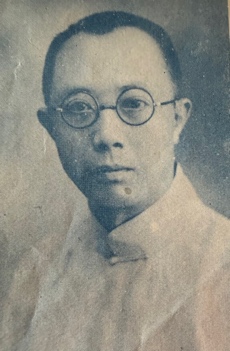
Li Jinxi
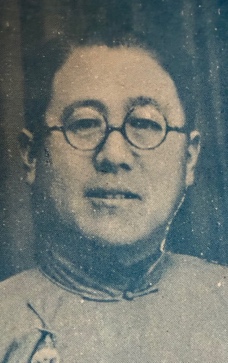
Wang Shoukang
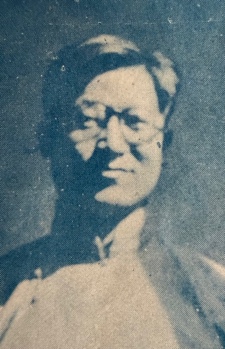
Wang Shuda
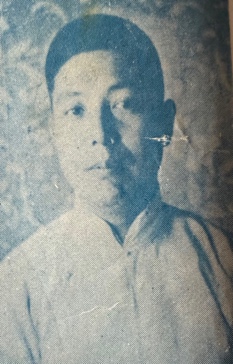
Sun Chongyi
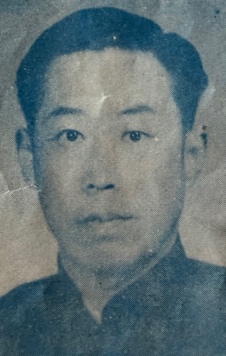
Xu Shirong
Li Jinxi, Wang Shoukang, Wang Shuda, Sun Chongyi, and Xu Shirong at the time
Due to tight funding, much of the editorial and proofreading work at the “Chinese Little Daily” was completed by students from the National Language Training Program at Beiping Normal College, who worked at the office under the guise of internships. For instance, Zhang Boyu and Feng Changqing served as assistant editors, responsible for extracting news, riddles, etc. In the later issues of the “Chinese Little Daily”, one could already read lengthy articles by Zhang Boyu, giving the impression that he could replace the teachers. Gong Qingxiang and Zhai Jianbang were responsible for assistant proofreading; proofreading this newspaper with phonetic notation was extremely tedious and laborious. All four of them later followed Wang Shoukang to Taiwan to engage in national language teaching, rather than “going to Taiwan together to run a newspaper” as some records suggest. Zhang Tao was also a student of the National Language Training Program, and he published an article under his full name titled “On the Urgency of Unifying the Language”.
In the “Staff Roster of Chinese Little Daily” of April 1948, two new editors were added: one was Fan Xueyin, a girls’ advisor at the Northwest Normal College, and the other was Cao Duanqun, the wife of Wang Shoukang. Wang Shoukang and Cao Duanqun had both worked at the Shandong Provincial Public Education Center, where they met and committed to each other for life. These two editors joined late but published many articles; the writer who signed as “Junyang” was likely Cao Duanqun. There was also a married couple in the office: General Affairs Director Liao Gongwang was a former colleague of Wang Shoukang from the Ministry of Railways before the war. He spoke with a thick Jiangxi dialect that outsiders could not understand at all, and his wife, Wei Wenqi, was the cashier. The family of three lived in the office and often quarreled without any inhibition. In addition, a group of workers and handymen lived in the courtyard. In winter, they would gather around the stove, holding a cup of tea, and chat endlessly. The gatekeeper, Li Tingrui, was very old but spoke with standard pronunciation and was warm and considerate. When the office gate was being repaired, he sat at the entrance and did not leave all night. Tang Rongwen, the newspaper deliveryman, was chubby and always wore an eyepatch over his left eye; he was particularly concerned about national affairs. These people often had minor disputes and conflicts, but they never neglected their work.
Most interestingly, in the “Little Literary Club” (Xiaoxiao Wenhui) column of the “Chinese Little Daily”, several young authors were actually the family members of the main writers. The brothers Wang Zhengzhong and Wang Zhengfang were the two sons of Wang Shoukang. They were studying at the Second Affiliated Primary School of Beiping Normal University at the time, and their short compositions were frequently published. In those days, Wang Zhengzhong’s compositions were far better than Wang Zhengfang’s, yet who would have thought that he would become a scientist, while Wang Zhengfang became a writer instead. Wang Jingzhao, Wang Jinglin, and Wang Jingti were cousins, all children of Wang Shuda’s family. Their articles were slightly naive but represented the most authentic state of children at that age. They later became famous medical experts and university professors, respectively. It seems that the good scholarship of the young authors in the newspaper laid the foundation for their future success.
The “Chinese Little Daily” was deeply loved by children in those days. If the young authors were the participants of the newspaper, the young readers were the beneficiaries. Sun Fenggong, the eldest son of Sun Chongyi, has been retired from his post as a middle school teacher for many years. Now in his eighties, he still recalls a past event related to the “Chinese Little Daily”. Once, when he was only seven or eight years old, he saw the news about the independence of Outer Mongolia. Feeling very curious, he went to ask his father. His father not only explained it to him but also praised him for his good habit of reading books and newspapers, which left an unforgettable impression on him for the rest of his life.
In January 1948, Zhu Jiahua, then the Minister of Education of the Republic of China, inspected education in Taiwan. He found that the promotion of Mandarin education in Taiwan was very active and achieved outstanding results. At that time, there were few Chinese newspapers in Taiwan, and while the “Chinese Little Daily” had distribution difficulties in Beiping, it had a substantial subscription base in Taiwan. Under the encouragement of others, Zhu Jiahua felt that if the Beiping “Chinese Little Daily” could be relocated to Taiwan and changed into a daily publication, it would play a greater role. Thus, he decided to charge Wei Jiangong and He Rong with the preparation. During this period, Wei Jiangong returned to Beijing, frequently visiting Wang Shoukang’s home and even bringing him four bananas shipped from Taiwan to persuade Wang Shoukang to go to Taiwan to run the newspaper. In the end, they agreed on a three-year term, and Wang Shoukang consented to go. In June 1948, the decree “Guozi No. 33733” directed He Rong, a full-time member of the National Language Promotion Committee, to move the “Chinese Little Daily” to Taiwan and change it to the “Mandarin Daily News” (Guoyu Ribao), with its funding and staffing transferred from Beiping to Taipei starting in July. In this way, after publishing 178 issues, the “Chinese Little Daily” quietly disappeared from Beiping in July 1948.
Finally, using a few lines from Li Yu’an’s “Song of the Chinese Little Daily”, let us commemorate this lovely newspaper and this group of high-minded, diligent, and hardworking newspaper makers:
Although there are many large newspapers in China, who knows what they say? People say the little newspaper is really good, let us sing the Song of the Little Newspaper.
Today’s little newspaper is indeed small, but events large and small are not few. Read it once every three days, and your knowledge grows higher day by day.
…
Crisp and clear pure national pronunciation, writing down the true soul of speech. If you don’t believe it, please read it aloud; it is truly very plain vernacular Chinese.
The national pronunciation follows the Chinese characters closely. If you don’t know the character, look for the national pronunciation. Reading characters alongside the phonetic notation, it is a vocal newspaper with vocal characters.
…
Row upon row of vertical text, with national pronunciation aligned beside them. The national pronunciation and the Chinese characters are never separated; how beautiful this special format is.
The vernacular writing is plain as plain can be, and words and sentences are even separated. Learning speech and learning writing, see how wonderful this little newspaper is!
…
The little newspaper is my little teacher, the little newspaper is my library. Study and make progress often, just like going to school to read books.
Although our little newspaper is small, it has a great goal ahead: guiding the people to seek progress, aiming to be a great school for the people.
…
China should think of unification. Dialects are complex and language is not uniform. The unification of the national language depends on the little newspaper, and the unification of China depends on the national language.
…
Appendix: Staff Roster of the “Chinese Little Daily”
| Name | Position | Native Place | Gender | Age |
|---|---|---|---|---|
| Jialin Xiao (Dichen) | Concurrent President | Fengxin, Jiangxi | Male | 53 |
| Wang Shoukang (Wang Fuqing) | Editing & Printing Director | Wuyi, Hebei | Male | 49 |
| Xu Yifei (Xu Shirong, Zhibai) | Editor-in-Chief | Beiping | Male | 37 |
| Fan Yuepei | Editor | Donghai, Jiangsu | Male | 53 |
| Fan Xueyin | Editor | Shenyang | Female | 40 |
| Cao Duanqun | Editor | Xinjian, Jiangxi | Female | 40 |
| Liao Gongwang | General Affairs Director | Fengxin, Jiangxi | Male | 43 |
| Li Qian | Accountant | Beiping | Male | 28 |
| Jiao Shixiang | Distribution | Beiping | Female | 26 |
| Wei Wenqi | Cashier | Hengyang, Hunan | Female | 32 |
| Li Tingrui | Receptionist | Beiping | Male | 63 |
| Nie Xingyuan | Messenger | Tongxian, Hebei | Male | 45 |
| Xu Yongliang | Messenger | Shunyi, Hebei | Male | 27 |
| Tang Puyou | Newspaper Delivery | Wanping, Hebei | Male | 42 |
| Tang Rongwen | Newspaper Delivery | Wanping, Hebei | Male | 52 |
| Liu Yuchen | Handyman | Huairou, Hebei | Male | 45 |
| Dai Chao | Rickshaw Puller | Beiping | Male | 28 |
| Manual Laborers | ||||
| Fan Guangfu | Typesetter | Beiping | Male | 32 |
| Dong Wenhui | Typesetter | Beiping | Male | 31 |
| Yan Zhi | Typesetter | Beiping | Male | 17 |
| Zheng Yuzhen | Typesetter | Tianjin | Male | 46 |
| Su Xianzhang | Typesetter | Changping, Hebei | Male | 41 |
| Xing Yukun | Typesetter | Wanping, Hebei | Male | 42 |
| Dong Zefeng | Typesetter | Qufu, Shandong | Male | 41 |
| Sun Tianmin | Typesetter | Nanpi, Hebei | Male | 38 |
| Ding Shengguo | Typesetter | Shunyi, Hebei | Male | 44 |
| Lu Zizhen | Typesetter | Beiping | Male | 37 |
| Sun Xiufeng | Pressman | Beiping | Male | 55 |
| Chen Dexi | Pressman | Beiping | Male | 28 |
| Li Changqing | Typecaster | Wanping, Hebei | Male | 36 |
| Gu Jinbiao | Typecaster | Beiping | Male | 33 |
| Liu Dianrong | Engraver | Tongxian, Hebei | Male | 32 |
| Li Shikun | Engraver | Beiping | Male | 38 |
| Zhao Darong | Paper Mold Worker | Beiping | Male | 42 |
| Luo Yuzhen | Cook | Beiping | Female | 48 |
| Wang-Mao Shi | Cook | Beiping | Female | 29 |
[!NOTE] A total of 36 people (staff listed above, manual laborers below).
Special thanks to Mr. Wang Zhengfang for his historical source support!
Thanks to Xi Bangrong for providing the staff list of the “Chinese Little Daily”!
References:
- “Chinese Little Daily” Bound Volumes
- Ten Years of Displacement for a Stubborn Child, Wang Zhengfang, Beijing Publishing Group Beijing October Literature and Art Publishing House, November 2018
- Historical Materials of the National Language Movement in Taiwan, edited by Zhang Boyu, Taiwan Commercial Press, November 1974
- Graduation Yearbook of National Beiping Normal College, 1948
July 22, 2026 in Beijing