

Gratitude and Giving Back — An Interview with Sun Fenggong and Xie Jingyi
Author: Yun Wang
Dedicated to the memory of Mr. Sun Chongyi on the 120th anniversary of his birth
Sun Fenggong is the eldest son of Mr. Sun Chongyi. Before retirement, both he and his wife Xie Jingyi were middle school teachers, and now both have entered their eighties. I interviewed them on a hot and stuffy morning and did not dare to drive. The Niujie Xili neighborhood where they live consists of resettlement buildings put up at the end of the twentieth century when the old Niujie district was demolished. On average, more than a dozen households here have to share a single semi-informal parking space. The standards of these resettlement buildings are low: the stairwells are narrow and dim, and the floors and walls are not only completely undecorated but already mottled. Uniquely, a small plaque reading “Yixingtang Study” hangs by the door of the Sun household. Mr. Sun opened the door for me, and Ms. Xie, though her legs and feet were not in good shape, also stood up and welcomed me to the seat of honor. As soon as I sat down, Ms. Xie had already poured me hot tea; on the tray on the tea table, a glass teapot and a glass teacup gave off the warmth of the tea. The room was cool and comfortable — it turned out they had both the air conditioner and the windows open.
Mr. Sun is hard of hearing and wears a hearing aid. He purposely sat on a round stool across from Ms. Xie and me. In this way, Mr. Sun leaned in to listen to my questions while loudly recounting the stories of his father Sun Chongyi. Ms. Xie would from time to time add supplementary details, offer explanations, or make corrections.
When I was in primary school, Mr. Sun Chongyi often came to our home; he was my grandfather’s colleague and close friend. He always wore a white prayer cap and never drank the tea my grandmother poured. That was the sum total of my understanding of Muslims at that time. Today’s interview, however, opened my eyes: they are well-read and courteous, humble and grateful; they attribute all they have received to the grace of Allah, and their faith is the driving force that guides them forward. In their telling, the story of Sun Chongyi (courtesy name Weiyi, sobriquet Liutang Laoren, religious name Yahya, 1906–1997) unfolds around three benefactors.
The first benefactor, Sun Yao (courtesy name Youming, sobriquet Youmin, 1891–1938), was Sun Chongyi’s fifth uncle. This requires beginning with the Sun family’s background. The Sun family’s ancestral home was in Nanjing; during the Ming and Qing dynasties, they moved north along the Grand Canal to Linqing. Linqing at that time commanded a strategic chokepoint of the north-south canal shipping, with merchants gathering and large numbers of Hui people living there. In the late Qing, the canal silted up and the Tianjin–Pukou Railway opened, ending the canal shipping and causing Linqing to decline. Following the tide of migration, the Sun family moved to Beijing and settled in Niujie, a Hui community. The Sun family were not a scholarly household but ran a “sheep trade,” that is, they sold beef and mutton. The first reader in the extended family was Sun Youming. In his early years he was involved in politics, serving many years in the Republican parliament, and later worked as an editor at Zhonghua Book Company, the Xinchen Bao, and the Beiping Chenbao, becoming a principal member of the publishing world’s “Chenbao Group.” On November 5, 1929, the ten-day journal Yuehua was founded in Beiping by Chengda Normal School; Sun Youming was invited to serve concurrently as chief editor until the autumn of 1931. This magazine was the longest-lived, most widely influential, and most representative Hui publication of modern China. Sun Youming was active in the Hui cultural circles of the capital, and together with Sun Shengwu, Ma Songting, and others he helped establish schools. His creed was “upright and uncompromising, diligent and dedicated.”
The Sun residence sat atop a high flight of steps at the western end of Shalan’er Hutong on Niujie Street in Beijing. Hanging on the north wall of the main hall was a couplet written by Sun Youming: “沙上锥锋觇笔妙,水中盐味司诗禅” (“The awl-tip on sand reveals the marvel of the brush; the taste of salt in water governs the Zen of poetry”) — this was the Sun family’s motto. Sun Youming was well versed in Chinese studies, skilled in classical poetry and seal carving, and had a particular affection for calligraphy. He converted the covered walkway of the courtyard into the “Tangyinwu Study,” where the room was filled with the fragrance of books and the courtyard outside was deep with crabapple blossoms — an ideal place for reading. Fifth Uncle Sun Youming laid down a rule that all the children of the family had to study there, and even in the midst of his busy schedule he would come to supervise and read alongside them. As a boy, Sun Chongyi sat there every day after school, reading and writing together with his peers Chongwan and Chongren and juniors like Fenglai. At ninety, Sun Chongyi could still vividly recount the stories Fifth Uncle had told there in those days. That he was later able to enter the Beiping Municipal Normal School immediately after primary school owed his classical Chinese foundation largely to the “Tangyinwu” family school and to his elder Sun Youming. It must be understood that at that time the school’s entrance exam was no less difficult than that of the Affiliated High School of Beijing Normal University — for the school not only provided room and board but also assigned jobs upon graduation. For this reason, Sun Chongyi, whose family was of modest means, chose this school. In the 1950s, when Sun Chongyi worked at the Institute of Linguistics of the Chinese Academy of Sciences, Ding Shengshu once praised his handwriting as “carrying the family tradition.” This family tradition came from Sun Youming, who from the perspective of a historian had penetrated the distinctive qualities of Ouyang-style calligraphy: preserving Ouyang style’s vigorous and steady character while blending in personal aesthetic, so that force and calm merged into harmony. He tirelessly promoted this style within the family, and Sun Chongyi benefited from it, becoming skilled in a beautiful Ouyang-style hand. He once used this hand to inscribe the title of Ahong Pang Shiqian’s book Nine Years in Egypt.
The second benefactor was Wang Kuan (courtesy name Haoran, religious name Abdul Rahman, 1848–1919), the Ahong of the Niujie Mosque, a modern reformer of Chinese religious education. In 1907, Wang Kuan founded a new-style Chinese-language teacher training school at the rear courtyard of the Niujie Mosque in Beijing. In 1908, he founded the Capital Islamic Two-Level Primary School, the first Islamic primary school in Chinese history specifically established for Muslim children — from then on, Hui children had the chance to study and change their fate. Because of the school’s success, by the time Sun Chongyi attended, it had been renamed the Twentieth Public Primary School of the Capital. Sun Chongyi remembered that in his first year of primary school, Ahong Wang Kuan gave a talk to the students in the courtyard. He spoke of how, after making the pilgrimage to Mecca in 1906, he was received by the Sultan of the Ottoman Empire (Abdul Hamid II); how they had discussed raising the caliber of Chinese Muslims and learning traditional Chinese Han culture; and how this was to be the means of revitalizing China’s economy. On that very day, Sun Chongyi resolved to earnestly master Chinese culture, and this became the starting point of his lifelong pursuit of learning.
The third benefactor was Mr. Li Jinxi, Sun Chongyi’s teacher at Beijing Normal University. In the 1950s, the Ministry of Education and the Institute of Linguistics of the Chinese Academy of Sciences jointly held three sessions of a Mandarin phonetics research class. The lead organizer, Ding Shengshu, was a member of the Academia Sinica, and Sun Chongyi was assigned to be responsible for the concrete teaching and mentoring work. When he handed his teaching plan and lesson plans to Ding Shengshu for review, Ding expressed enormous trust: “No need to look them over — we are both disciples of Mr. Qian Xuantong, and you are also Mr. Li Jinxi’s star pupil…” From this one can see how deep Mr. Li Jinxi’s influence on Sun Chongyi was. In 1930, Sun Chongyi was admitted to the long-yearned-for Beiping Normal University, where he completed his studies under the guidance of famous teachers such as Qian Xuantong and Li Jinxi and then went to teach at the Affiliated High School of Beijing Normal University. During his university years, the Mandarin Language Movement was in full swing, and studying at Beijing Normal University meant being at the very center of that movement. As a student in the Chinese Department, Sun Chongyi was deeply moved. Li Jinxi held him in high regard and placed him directly in the Chinese Dictionary Compilation Office, where he had the opportunity to work with many national language experts and scholars.
Between March and June 1935, in order to cast phonetic-annotation Chinese character copper types, more than fifty thousand characters were first drawn from nine dictionaries and three typewriter tables, from which the most commonly used characters were then selected. Seventeen people took part at the time: Li Jinxi, Qian Xuantong, Wang Yi, Chen Maozhi, Wei Jiangong, Zhao Yuanren, Xiao Jialin, Shen Yi, Lu Ji, Li Buqing, and Sun Shiqing were members of the National Language Committee; Xu Yishi, Peng Wangqun, Zhang Weiyu, Wang Shuda, Lu Xiuru, and Sun Chongyi came from the Chinese Dictionary Compilation Office. In the end, by vote, they settled on 6,788 commonly used characters as the blueprint for casting copper types. This list of commonly used characters not only served as the basis for printing but also had guiding significance for the compilation of dictionaries and textbooks. Qian Xuantong’s diary corroborates this. April 30, 1935: “In the afternoon returned home briefly, then went to a certain Hai [Note: Qian Xuantong’s nickname for Zhonghai]. For the matter of the phonetic copper types, Wang and Li advocated that having as few as possible for characters with multiple pronunciations would be best. We invited Sun Chongyi, Wang Shankai, even Zhao Shanzhai and others to serve as consultants, while Wang, Li, and Qian, the three of us, would decide… Messrs. Sun and Wang are university graduates and can well serve as consultants; how could Zhao Shanzhai be inferior even to Bai Dizhou?” To gain Qian Xuantong’s approval was no easy matter. May 4: “In the afternoon went to a certain Hai; Li, Wang, Wang, and Sun — the four of them — were just discussing the selection of copper-type characters, and I joined in too.”
After graduating from university, Sun Chongyi bought himself a counterfeit Philips bicycle. Genuine Philips bicycles were British imports at the time; the fakes were assembled from mismatched parts. He was not doing it to be fashionable. Like many Republican-era teachers, he began the clock-punching life of a schoolmaster. In addition to the Normal University Affiliated High School, he substituted at the Normal University Girls’ Affiliated High School, the Third Girls’ Middle School, and other schools. On one hand, he loved teaching and always hoped for more practical opportunities; on the other, middle school teachers’ salaries were low at the time, and with the Nationalist Government in fiscal difficulty, schools frequently fell behind on wages. To meet the needs of household expenses and of buying books for his own scholarly research, such a life was the norm for them.
Later, Sun Chongyi served as a lecturer at Beiping Normal College (that is, Beijing Normal University), then worked at the Committee on Script Reform and the Institute of Linguistics of the Chinese Academy of Sciences, and finally taught in the Chinese Department of Hebei Beijing Normal College (later renamed Hebei Normal University) until the end of his life. He was one of the principal compilers of China’s two most important dictionaries, the National Language Dictionary (Guoyu Cidian) and the Contemporary Chinese Dictionary (Xiandai Hanyu Cidian); he was also a professor with students all over the country — a truly accomplished scholar. Yet whenever he spoke of these achievements, he always attributed them to his mentor Mr. Li Jinxi. In May 1951, Sun Chongyi joined the Jiusan Society and became one of its earliest members. This political alliance was composed primarily of mid- and senior-level intellectuals in the fields of science, technology, education, and culture; the person who introduced him was none other than Li Jinxi.
If only gratitude existed, the meaning of life would not fully manifest. Sun Chongyi used his own efforts to walk the path of giving back.
Upon graduating from primary school and entering the Beiping Municipal Normal School, Sun Chongyi began his independent life and self-development. Living at the school, as soon as he received his monthly living allowance he would immediately hand it over to the breakfast shop next door. There he took his meals with the young shop assistant — good or bad, it kept him fed. In 1926, Sun Chongyi graduated with excellent results. The school assigned him a post at the Beiping Library, but he chose instead to go to Shijiazhuang to teach at Fulun Primary School. On this Sun Youming wrote in a letter of the time: “Chongyi, in his youth, finds himself in modest circumstances, but his aims remain upright — he is the rising talent of our family. On his departure I taught him to take note at all times of the local situation, to record it in a notebook — accumulated over time, it will become something of daily use.” Fifth Uncle’s expectation and instruction leap off the page, and Sun Chongyi took them carefully to heart, forming a lifelong habit of keeping diaries and notes. Sun Chongyi had left home with his own plans in mind: Fulun Primary School belonged to the Peking–Hankou Railway and its remuneration was quite generous. There he earned six silver dollars a month. He sent three home, spent two, and saved one. In this way, after three years of work, he had saved enough for university and resolutely resigned, preparing to pursue further studies.
When he returned to Beiping, it happened that Chengda Normal School was moving from Jinan to Beiping, and Yuehua magazine and Beiping Islamic Middle School (renamed Beiping Northwest Public School in 1931) were being founded; Sun Youming served as chief editor and school trustee. At his fifth uncle’s invitation, Sun Chongyi began submitting articles to Yuehua. Together with Wang Mengyang and other Hui youth of Niujie, and under the aegis of the “Pursuit Society” attached to the Beiping Islamic Bookstore and Press, he also published articles under pen names, aiming to spread Islamic culture, broaden Muslims’ intellectual horizons, and promote the Chinese translation and modern dissemination of Islamic classics.
After graduating from Beijing Normal University, Sun Chongyi strove to model himself on Sun Youming, devoting his life to education, scholarship, and service to society. He and his fifth uncle together became the two most renowned scholars of Niujie — one has to say this was the best repayment he could offer his uncle. In 1991, when Sun Chongyi heard that the old Niujie residence was to be demolished, his longing for his fifth uncle was stirred, and he wrote a seven-character regulated verse, “Tangyinwu,” to present to his uncle’s son Sun Chongwan and his wife, in which longing and attachment overflow: “斗室营成为属文,暑天走笔构思勤,棠阴满院云天渺,无限凄凉忆旧芬” (“A tiny room built for the sake of writing; in summer heat the brush ran, thought toiled diligently; crabapple shade filled the courtyard, sky and clouds far and dim; boundless is the desolation of remembering old fragrance”).
Sun Chongyi was a devout Muslim, and the daily prayers were his required practice. The mosques he most often visited were Xidan Mosque, near his workplace, and Niujie Mosque, near his old residence. There he came to know many famous Hui figures. He enjoyed making use of his linguistic gifts, conversing with them in different dialects. For example, Ahong Pang Shiqian and the historian Bai Shouyi were both Henanese but from different regions of Henan, and Sun Chongyi could distinguish between varieties of Henan speech, which greatly impressed people. Yet these interactions were not merely social. Sun Chongyi never forgot that it was Ahong Wang Kuan’s founding of schools that had made him what he was, and he hoped to contribute his own modest effort to Hui education. In early 1947, the Ahongs Ma Songting and Pang Shiqian founded the Beiping Islamic Seminary at the Dongsi Mosque in Beiping, training Ahongs from all over the country. An Ahong was at once a religious leader, the principal of the Hui school, and the head of the medical association — these “three headships” had a profound influence among Hui people everywhere. Sun Chongyi not only took a teaching post at the seminary, but also used the opportunity to promote the national language. This won the support of the National Language Promotion Committee, which specially dispatched He Meicen, Xu Shirong, and others to conduct national language training there. Later, when Ma Songting wanted to turn the seminary into a Hui university, Sun Chongyi enthusiastically agreed and even drafted the founding declaration. Due to political changes, however, the seminary was closed; some of its students went on to the Department of Oriental Languages at Peking University to continue their studies, while others transferred to North China People’s Revolutionary University and became Arabic-language diplomatic personnel. These people later played important roles among Muslims in various fields and locales.
Sun Chongyi repaid Mr. Li Jinxi’s recognition and kindness in the manner of a candle burnt to ash. After the outbreak of the War of Resistance, Li Jinxi and other teachers, students, and fellow national language colleagues went south or west; Sun Chongyi, who already had a family, remained in Beiping. His wife Wang Ronghua had also graduated from Beijing Normal School and was a primary school teacher. After the July 7 Incident, the Beijing Normal University Affiliated High School was occupied by the Japanese and turned into a stable, and classes were suspended for a time. But the work of the Chinese Dictionary Compilation Office never stopped. This is also reflected in Qian Xuantong’s diary. September 17, 1937: “At half past thirteen went to a certain Hai and met Zhou, elder Wang, junior Wang, Sun Weiyi, Wang Shan, and others. Left the sea at eighteen o’clock.” October 5, 1938: “At eleven in the morning went to Zhonghai and met little Wang and Hui Sun.” Qian Xuantong was trapped in Beiping due to his health, and the Chinese Dictionary Compilation Office was the place he visited most often at the time. Sun Chongyi also wrote in his memoir “Impressions of Mr. Qian”: “Mr. Qian would lie on a canvas chair, talking with mouth and pointing with hand — of national affairs, of private life, of scholarship and thought… The July 7 Incident broke out, and Mr. Qian felt profoundly grieved and indignant, talking to anyone he met of the danger of our country having no defense and of the terrifying future of the occupied territories.”
It must be said that carrying on in an occupied territory during the war years was truly a difficult thing. On one hand, the Beipingers’ living conditions were extremely harsh: food was scarce, and one could only eat blended flour mixed with sand. When there were blackout controls, one had to use kerosene lamps. On the other hand, humiliation constantly accompanied anyone with a conscience. Going through the city gates one had to bow to Japanese soldiers, and every few days there were “celebrations” of the fall of one region or another. The “Provisional Government of the Republic of China” hung its sign at Zhongnanhai, and the Chinese Dictionary Compilation Office at Xisisuo was demanded by the puppet government to be requisitioned on the pretext of compiling textbooks. By this time the Nationalist Government could no longer function normally, and the Compilation Office’s funding was no longer guaranteed. In early 1937 only the first volume of the National Language Dictionary had been published when the staff scattered. Under Wang Yi’s leadership, Xu Yishi, Wang Shuda, Peng Xinru, Xu Shirong, He Meicen, Fu Yan, Niu Wenqing, and Sun Chongyi relied on advances on royalties and other income to complete the compilation and publication of the National Language Dictionary (eight-volume edition). Regrettably, being in occupied territory, the dictionary was branded with a colonial mark, incorporating a large number of Japanese vocabulary items. On November 21, 1947, in the Ta Kung Pao (Tianjin), the compilers of the National Language Dictionary jointly signed and published the article “Reply to Mr. Gao Ming’s Critique of the ‘National Language Dictionary,’” writing: “This dictionary is, after all, but a rough experiment in arrangement and organization, and there are surely more than a few flaws to be improved; especially since it was published in an extremely abnormal era and in an extremely peculiar territory, we do not know how many things went contrary to our wishes. We are unwilling to passively seek society’s forgiveness — instead we actively ask society for criticism.” From this one can see just how difficult it was for Sun Chongyi and his fellow compilers to hold fast, in such a plight, to the responsibility of propagating the national language. Except for Wang Yi, Xu Yishi, He Meicen, and Peng Xinru, these people were all students of Mr. Li Jinxi; their perseverance was not only love for the cause of the national language but also a safeguarding of their mentor’s ideal.
After the victory in the War of Resistance, Li Jinxi returned to Beiping and became Dean of Academic Affairs of Beiping Normal College; he immediately placed the Chinese Dictionary Compilation Office under the college’s management. Under Li Jinxi’s organization, Sun Chongyi and several colleagues eventually completed the compilation and publication of the National Language Dictionary (four-volume edition) on the basis of the “eight-volume edition.” This dictionary was the most important fruit of the Mandarin Language Movement; it became the cornerstone of the modern global standard of Chinese and remains in use in Taiwan to this day. In 1947, Li Jinxi opened a National Language Training Program at Beiping Normal College to cultivate the urgently needed senior national language professionals, and Sun Chongyi was invited to serve as a lecturer. Later, when Taiwan requested that graduates be sent there, Sun Chongyi also served as an examiner, selecting national language talent for Taiwan; these students who went to Taiwan became the pillars of Mandarin promotion on the island.
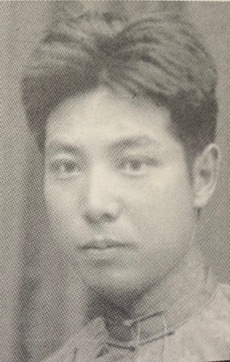
Sun Chongyi at his university graduation
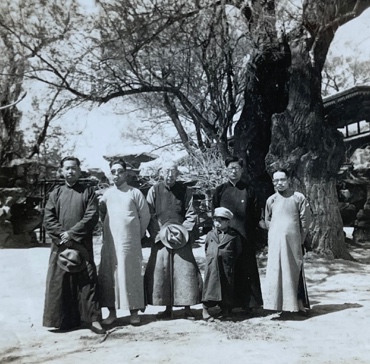
Colleagues of the Chinese Dictionary Compilation Office during the War of Resistance (from left: Xu Shirong, Sun Chongyi, Xu Yishi, Wang Shuda, He Meicen)
However, the upheavals of 1949 left the staff of the Chinese Dictionary Compilation Office with virtually nothing to do for about five years, precisely during Sun Chongyi and his peers’ golden years — and matters like grade evaluation were even further out of their reach. At this point, some began seeking other work on their own and departed, while Sun Chongyi stayed with Mr. Li Jinxi. He completed the compilation of several small dictionaries such as the Learning Culture Dictionary and the Homophone Dictionary, took part in teaching and research seminars at Beijing Normal University, and assisted Mr. Li Jinxi in matters concerning script reform. In 1955, following institutional restructuring, Sun Chongyi and others transferred to the Committee on Script Reform; in 1956 they transferred again to the Dictionary Editorial Office of the Institute of Linguistics of the Chinese Academy of Sciences, and began work on compiling the Contemporary Chinese Dictionary. Sun Chongyi was one of the principal compilers of the trial edition of the Contemporary Chinese Dictionary and also served as the leader of the second group. This dictionary, after several decades, remains the standard for language study and teaching in mainland China. At the same time, Sun Chongyi, Wang Shuda, He Meicen, and Fu Jieshi also took part in the deliberations on the Chinese Pinyin scheme, jointly publishing “Opinions on the ‘Chinese Pinyin Scheme (Draft)’” in issue 53 of the “Script Reform” supplement of Guangming Daily.
In 1962, considering that the Institute of Linguistics no longer had plans to compile any large dictionaries, Mr. Li Jinxi arranged for Sun Chongyi and others to take up lecturing posts in the Chinese Department of Hebei Beijing Normal College. By then many of their juniors had already become professors, but Sun Chongyi did not mind these things; he said he loved teaching.
Sun Chongyi had great respect for Mr. Li Jinxi, on whom Mr. Li relied not only in work but also in life. Li Jinxi had two wives, and navigating between them was bound to produce awkward situations. Sun Chongyi took on the role of go-between: he was not only the postman relaying messages but also responsible for explaining and mediating, winning the trust of both wives, and became the thread that sewed the Li household together in harmony.
Sun Chongyi’s gratitude and giving back also showed in the equanimity with which he faced all setbacks and injustices. In others’ eyes, many unfair things had befallen him; his wife once chided him: “You few really are a bunch of foolish old men — you don’t fight for anything, don’t grab anything, and just accept it all…” She was referring to Sun Chongyi and several old friends from the Chinese Dictionary Compilation Office. The wartime matters need not be discussed; after peace came, while others were busy getting their grades set and enjoying benefits, they were left aside because of staffing-quota issues. When still attached to the Committee on Script Reform, Sun Chongyi had been classified as a senior editor (associate senior rank); when he went to Hebei Normal College the school had promised to promote him to professor, but in reality he was made a lecturer again, and the housing subsidy of fifteen yuan per month he had enjoyed at the Institute of Linguistics was also canceled — an amount equivalent at the time to a college student’s monthly food allowance. In 1962, amid economic hardship and tightened policies, promotions were frozen. Sun Chongyi uttered not a word of complaint and continued to work as before. This was precisely the precious patriotic and dedicated spirit of this generation of old intellectuals. Then came more than ten years of the Cultural Revolution’s stagnation; not until the end of 1977 were systems such as title evaluation restored, and by then Sun Chongyi was already in his seventies.
In 1969, in accordance with national requirements, Hebei Normal College was dispersed to Xuanhua. Four courtyards built on the Yanghe riverbank six kilometers from the city center became the new campus. The buildings were rows of one-story houses, all “rammed-and-piled” (gan da lei) construction — red bricks by the door and window frames, and mud-brick fill in the walls. The dormitories had no bathrooms, no running water, and no heating; there was a bathhouse only at the department headquarters in the village, and people from the College of Chinese Literature had to walk several li to reach it. Xuanhua’s winds were strong and the climate cold, and living conditions for teachers and students were extremely bad. A jingle then circulated among the local people: “From afar they look like people fleeing famine; up close they look like beggars; on closer inspection, they are from Hebei Normal College.” Sun Chongyi, in his sixties, not only had to take part in farm labor together with everyone else but, being Hui, also had to cook his own porridge to solve the problem of meals. The hardship of life was one thing; during the Cultural Revolution, Sun Chongyi was even branded a “counter-revolutionary” on trumped-up charges. After repeated appeals, he was formally rehabilitated only in March 1980, ten years later. When everything was finally back on track, Sun Chongyi, by then already at retirement age, threw himself back into teaching and research with wholehearted enthusiasm. He joined the Linguistic Society of China, founded in 1980, and became active once more in the national language field. In July 1981, the Dictionary of Linguistic Knowledge, which he had returned to the trade to edit, was formally published.
Mr. Long was the last graduate student Sun Chongyi advised; when he graduated, Sun Chongyi was just turning eighty. By then he was too old and frail to go to Hebei Normal College in Shijiazhuang to teach, so he held classes at his home on Xi’anfu Hutong in Xidan, Beijing. Because housing was cramped, in order to make a teaching space for Sun Chongyi, his wife would take water and diabetes medication early on and, pushing their little granddaughter in a stroller, go to the roomiest spot nearby — in front of the Telegraph Building — and stay there for two or three hours at a stretch. Since Mr. Long’s chosen field of phonology was quite obscure, Sun Chongyi specially invited Yu Min and other experts to ensure that the thesis defense was both professional and smooth.
In 1996, on his ninetieth birthday, Sun Chongyi wrote “Reflections at Ninety,” expressing his calm and grateful state of mind: “燕市寻常一穆民,怀清守真立吾身。两依师馆求严教,半世持勤育幼民。华夏兴衰牵肺腑,语文研索企精纯。行年九十知感主,愿保斯心度晚辰” (“An ordinary Muslim of the Yan capital, keeping purity and holding to truth, I made my stand. Twice I leaned on teachers’ halls to seek strict instruction; half a lifetime I toiled to raise up young people. China’s rise and fall move my heart; my quest in language reaches for the pure. In my ninetieth year I know to thank the Lord; may I keep this heart through my remaining days”). In 1997, Sun Chongyi passed away from illness, leaving boundless longing behind.
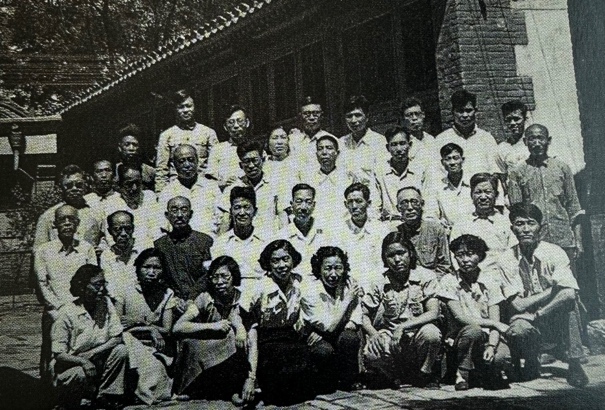
Summer 1957: full group photo of the Editorial Office of the Contemporary Chinese Dictionary in front of their office. Second row, first from right: Wang Shuda; second from right: Xiao Jialin; second from left: He Meicen. Third row, first from left: Fu Yan; sixth from left: He Danjiang; seventh from left: Sun Chongyi.
At Sun Fenggong’s home, I noticed the huge bookshelf lining the narrow walkway of that cramped space, like a bridge stretched across time. In this humble dwelling of only a few dozen square meters, they had actually amassed a collection of 25,000 books! After retirement, Mr. Sun and Ms. Xie not only write books and calligraphy, but have also used their collection to run the “Yixingtang Study” reading club. Their original intent is precisely to carry on their father’s ideal of repaying Ahong Wang Kuan’s work in education, and to spread genuine Muslim culture.
Sun Fenggong could recall many of the colleagues and friends around his father, which astonished me. He said that because he was the eldest son, whenever his father’s colleagues or friends came to the house and he was home, his father would call him out to greet them properly, and if he had nothing else to do, would have him keep them company. Because Sun Chongyi had once lived at the Chinese Dictionary Compilation Office, the family had even shared quarters with the family of his colleagues, the brothers Xu Shilu and Xu Shirong. Ms. Xie also recalled that their marital chamber when they wed in 1968 was the former archive room of the Chinese Dictionary Compilation Office — a west-facing room of only fifteen square meters, in whose cabinet drawers were tens of thousands of index cards. The collection of these cards had once reached 2.5 million — the fruit, gathered through the ravages of war, of the dictionary compilers’ painstaking effort. This filled them with reverence.
Sun Chongyi’s children mostly followed their father’s calling and work in education and culture. On commemorative days they buy several hundred copies of the Contemporary Chinese Dictionary as gifts for relatives and friends. In 2024, after they learned that I was researching the Mandarin Language Movement, they specially gave me twenty-six of Mr. Sun Chongyi’s professional books and one notebook. Gratitude and giving back — not only from Mr. Sun Chongyi himself, but from his descendants as well — is the main theme of this family that I have read.
References:
- Yixingtang Collected Poems and Essays (《懿行堂诗文集》), Xie Jingyi
- Diary of Qian Xuantong (《钱玄同日记》, annotated edition), ed. Yang Tianshi, Peking University Press, August 2014
- New Middle School Library — Phonetic-Annotation Chinese Characters (《新中学文库 注音汉字》), ed. Li Jinxi, Commercial Press, August 1936
- Discussion Collection on the Draft Chinese Pinyin Scheme (《汉语拼音方案草案讨论集》, First Series), Script Reform Publishing House, January 1957
- Bygone Days at Yanghe South — A Realistic Account of Hebei Normal College (《洋河南往事 河北师院写实》), Zhao Zhenjun, Hebei Education Press, January 2015
August 2, 2026, Beijing